Dr. Chadene Tremaglio “Exploring Career Avenues to Science Education”

One of the most difficult struggles career driven individuals face on a daily basis is successfully balancing work and family life. If you’re anything like me, you’re wondering what is the best way to approach this dilemma. Thankfully, Beyond the PhD had the pleasure of hosting Dr. Chadene Tremaglio this past February, who was able to shed some light on her various struggles related to this topic and provide some insightful advice. Dr. Tremaglio began her educational journey at the Boston University of Medicine where she fell in love with Microbiology. Her research was on the mechanism of Respiratory Syncytial Virus (RSV) replication and transcription and she was able to obtain her PhD in 2014. Her initial interests were in teaching, however prior experiences discouraged her from this field, causing her focus to shift entirely to research alone. From 2014-2016, she obtained her Post-Doc at the Dana Farber Cancer Institute at Harvard Medical school where she studied putative tumor suppression of ovarian cancer and epigenetic reprogramming. Despite previous experiences, her love of teaching did not falter. She became involved in the training of a Master’s student and technician within the lab. During this time, she obtained some valuable skills that showed her how to be independent, which significantly improved her self-confidence. While she was on her way to becoming a successful Scientist, behind the scenes, she was navigating the rough, albeit rewarding waters of motherhood. During her 2nd year as a postdoc, she welcomed her 2nd child. Her passion for bench research began to wane during this period, so she decided to move to CT, where she was able to focus more on her family. All the while, she managed to keep herself involved in the scientific arena by exploring creative avenues such as blogging, freelance science writing and illustration and even podcasting. Her blog post was entitled “The Sci-minded idealist”, which largely dealt with ways to write science-based lay articles geared towards the general public. Her freelance science illustration work allowed her to share her drawings with other researchers who used her art to help explain various scientific concepts at several different conferences. 

She eventually followed her dreams of becoming a teacher, and is now an assistant professor at the University of Saint Joseph, on the tenure track. She absolutely loves what she does for a living and enjoys bringing the thrill of science to life for her students. She even finds ways to incorporate her outside interests into her current career by challenging her students to create comics based on science to enhance their learning to a higher level. One thing that stood out most to me from her talk, is that work-life balance is a myth. No matter how hard you strive to have it all, it’s just not possible. Her best advice is to prioritize and manage crises as they arise. I think these words of wisdom extend far beyond her years, she truly understands that it’s unrealistic to have a “perfect” balance. The best you can do is to take things day by day. She has found that the way to accomplish this is to build your network. Send those emails, reach out to people after seminars, collect mentors and plant the seeds that will help you to grow connections and gain invaluable opportunities. She also stresses that it’s Ok to take the necessary time for family, even if it means leaving work when there’s still things to be done. Overall, it really does take a village and Chadene, a devoted Mom and Professor, has proven this exponentially.
Academic Careers Off the Research Tenure Track

Beyond the PhD recently hosted Dr. Giulia Vigone and Dr. Pamela Monahan who talked about their involvement in academic careers off the tenure track. Both Giulia and Pamela work at Northwestern University in Chicago, IL. They started by talking about their career paths that led them to their current positions in Higher Ed administration. 

Giulia attainted her MS in Molecular Biology and Genetics as well as her PhD in Bioengineering and Bioinformatics with a focus in Reproduction/Fertility from Universitá Di Pavia in Italy. She then pursued a postdoc opportunity and came to the United States to study reproductive sciences in the lab of Dr. Laurinda Jaffe at UConn Health. While at UConn Health, Giulia co-founded Academia Industry Opportunities Group (AIOG) with Rob Pijewski; AIOG has since rebranded to Beyond the PhD. She also helped start the postdoc association at UConn Health. Giulia always had an interest in careers outside academia and wanted to show students and postdocs various options outside of tenure track positions. After completing her postdoc, she then transitioned into a career in professional development in higher education. She currently has a variety of roles within the Northwestern Center for Reproductive Sciences (CRS) including lecturer for professional development courses, Director of MS Student Affairs, Alumni Network Lead, Co-Leader of Community Engagement, and Co-Leader of DEI (Diversity, Equity, and Inclusion). Giulia’s role is a unique combination of educational development, community engagement, and admin work. When reflecting on her journey, she stressed the importance of networking, following your passions, and finding good mentors who will support your career development. 

Dr. Pamela Monahan followed Giulia by sharing her career journey. She, too, stressed the importance of networking and finding a career that fits your interests. Pamela mentioned that it’s important to play to your strengths and figure out your likes and dislikes. Her career path began as an undergrad at the University of Tennessee where she earned a BS in Biological Sciences and became involved in undergraduate research. Pamela then went on to complete a MS and PhD in Molecular and Integrative Physiology at the University of Illinois. During this time, she worked as a graduate teaching assistant and focused on research training and career path exploration. She explained how there was very little information on careers outside academia shared with her during her time as a graduate student which left her feeling a little lost as to her next steps. After earning her doctoral degree, Pamela decided to pursue a postdoc at Northwestern University in the lab of Dr. Kelly Mayo. Networking not only helped her find this opportunity but was important at every step of her career journey. Her postdoc facilitated her abilities as more of an independent researcher, solidified that she did not want a career that involved grant writing, bettered her management skills, and further developed her love for teaching and mentoring. Dr. Monahan then got involved in more teaching opportunities during her postdoc and began teaching labs and other classes at Northwestern to gain further experience. After her postdoc, she interviewed for and attained a lecturer position at the CRS at Northwestern. Here she focused on curriculum development, student mentoring, learning Higher Ed administration, and further networking to expand her knowledge and reach. She was later promoted to the CRS Director of Grad & Postdoc Affairs. She is also the co-lead for the Community Engagement Committee and serves on the CRS diversity committee and SSR Diversity Committee. 

Giulia and Pamela then discussed admin positions within Higher Ed. These include career and professional development, student affairs, postdoctoral affairs, recruitment and admissions, faculty development, academic advising, program management, institutional research, DEI offices, and grant writing. There are also teaching positions within Higher Ed in both the academic setting and at the level of curriculum. In the academic setting this could be at community colleges, smaller liberal arts colleges, research focused institutions, or institutes and research centers. There are a variety of opportunities at the curriculum level including for undergrad, graduate, medical school, clinical, professional development, or for online education. They followed up with some tips on how to get involved and network if you are interested in Higher Ed Admin. This included becoming a member of the NPA (National Postdoc Association), becoming a member of the GCC (Graduate Career Consortium), looking for internships or observerships in your institution, getting leadership experience, and networking and connecting with individuals who work in Higher Ed Admin. The presenters then gave some advice on what to do if you are interested in teaching positions. First, it is important to refine and tailor your CV/resume for education and make sure you have a teaching philosophy and diversity statement. Another great thing to help your career in this field is to find opportunities to teach. It is also important to network and get leadership experience. 

Giulia and Pamela then answered some questions from the audience. Someone first asked if you need a postdoc to attain admin positions in Higher Ed. A postdoc is required at some institutions, but is not necessary for all positions. However, it is helpful to have experience and independence beyond your graduate degree. Teaching experience and familiarity with the field is important for these positions. Next, someone from the audience asked if the presenters had any recommendations for finding non-traditional postdocs that focus more on education and curriculum development. Indeed, there are teaching postdoc positions that pair research with teaching opportunities and curriculum development. While these aren’t the most common postdoctoral positions, they do exist and there are specific programs for this at UNC Chapel Hill and the University of Pennsylvania. LinkedIn is also a great resource to find positions like this. Finally, an audience member asked what growth and career advancement look like in Higher Ed admin. The presenters stated that this is somewhat dependent on the position, but there is lots of opportunity to expand both vertically and laterally. This could mean being promoted, professional development, incorporating more of your interests, taking on different leadership roles, or finding new and fulfilling opportunities. There are lots of career possibilities in Higher Ed to explore!

HigherED Resources

Post-Graduation Job Opportunities: GOglobal Graduate Programs

By Rachel Gilmore

At the end of February, I attended an informational webinar about the Inhouse Consulting Global Graduate Program run by Merck KGaA. Merck KGaA is a science and technology company that does business in the areas of healthcare, life science, and electronics. As I perform research in the biomedical science field, I had recognized Merck through their life science branch, MilliporeSigma, however, I did not know Merck KGaA also ran multiple graduate programs. Below, I’ll summarize what I learned about this unique career path from the webinar and a bit of my own researching.

Merck KGaA’s GOglobal Graduate Programs are made for graduates within one year of earning an MBA, Masters, and/or PhD. While there are two paths for GOglobal Programs, either Inhouse Consulting or Functional Graduate Programs, there are some features shared by all of Merck KGaA’s programs. The GOglobal Programs are two years long and include three to four individualized rotations through various sectors, which are dependent on the program an individual chooses, as well as include an international experience. According to Merck KGaA, these programs also feature competitive compensation & benefits.

The Inhouse Consulting Program is mainly catered toward graduates with experience and/or training in both natural science and business. This program kicks off twice a year, usually around January and June. If consulting isn’t something that sounds like it’s for you, there are other various Functional Graduate Programs. Each Functional Graduate Program has a distinct focus: marketing, commercial, research & development, and human resources. Most Functional Graduate Programs kick off in the spring, with the exception of HR which starts in September. What really intrigues me about these programs is the opportunity for an international experience and that Merck KGaA’s goal is to place all GOglobal graduates into direct hire roles following successful completion of the program. I’m very passionate about traveling the world, so working in a different country for approximately 6 months is super appealing. Also, the job security of a planned exit strategy into Merck KGaA is nothing to scoff at! 

The application timeframe for these programs usually starts around 6+ months prior to start of the program, and Merck KGaA has a Job Portal where you can create a job alert to notify you via email when the program(s) you’re interested in has/have openings. To access Merck KGaA’s Job Portal please click here: https://jobs.vibrantm.com/emd/search/?createNewAlert=false&q=%22associate+consultant%22%2C+%22Operations+Leadership+Development+Program%22%2C+goglobal&locationsearch=&optionsFacetsDD_country=US&optionsFacetsDD_customfield1=&optionsFacetsDD_customfield4=&optionsFacetsDD_customfield3=

Even though I’m still a while out from the appropriate timeline to apply for Merck KGaA’s GOglobal Graduate Programs, I was excited to share a post-graduation opportunity with our Beyond the PhD community. Personally, the Functional Graduate Program in Research & Development sounds like it would be the best fit for me. I think these programs should be considered by PhD or Masters students nearing the end of their degree who are interested in industry careers and share a love of traveling.

To learn more about GOglobal Graduate Programs, head over to Merck KGaA’s website: https://www.emdgroup.com/en/careers/students/graduate-program-goglobal.html.

Meet Jaden Spring 2022 Campus Ambassador

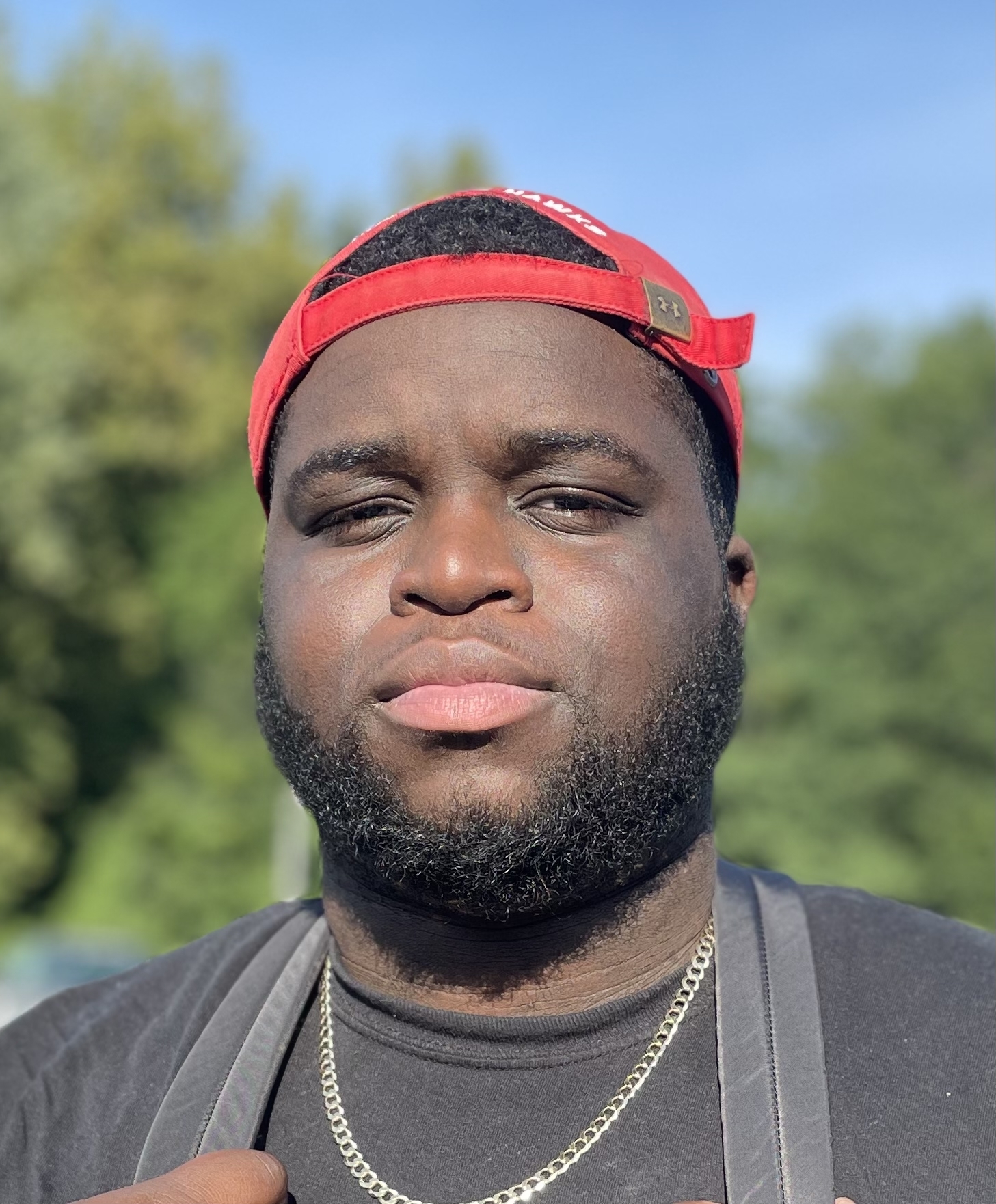
Jaden Richardson is a junior at the University of Hartford studying biology and pre- pharmacy. He graduated from Freeport high school in NY in 2019.

While writing this piece, I stopped to reflect on what keeps me going and why I wanted to be a part of the medical field, specifically pharmacy. Being the oldest of three and the protector of my little brothers, compassion and my constant desire to help others was almost innate .

Growing up, my first dream job was definitely to be an astronaut. The thought of space’s vastness and striving tounlock its limitless bounds was something that always intrigued me. Similarly to my fascination with space, the unknown aspects of the study of medicine and biological sciences is what mostly intrigues me about the field.

In the third grade is where my big shift from astronomy to my love of medicine came to fruition. My third-grade teacher at the time was a person who took the study of animals very seriously. The class at the time had a turtle named Benji. Benji was a very interesting turtle in that he had a large abscess on the side of his face. Throughout the school year, all my classmates would take turns feeding him and giving him his medicine. Now, at the time none of us knew what the medicine was for but we still willingly gave it to him in order to help .This was a pivotal point for me in that it subconsciously made me more interested in different types of treatments out there andtheir effects on living things. My turn came towards the end of the year and the week I was feeding him, his infection was almost completely gone. The whole class cheered and I was seen to be the hero of the year for saving Benji. From then on, I knew I wanted to work with medicine and save others like Benji. This way of playing doctor evencontinued at home and to this day. When anyone in my family gets sick, I’m the first one everyone goes to for help.

As my education furthered, my love for science continued to grow. I took more science classes in order to learn as much as I could and it became like an obsession to me. Being as competitive as I am, in high school I began taking part in science fairs and outside research. This influenced my decision to come to college in hope thatI can continue my passion.

Currently, I am an undergraduate junior at the University of Hartford as a biology, pre-pharmacy major.The deciding factor for me in going this route was when I had a

conversation with a family member who is recently new to the field. His overall passion for the impact he was making on his patients on a daily basis inspired me to want the same career. I’ve envisioned working in a hospitalbecause that’s where I believe some of the best work is done in this field.

Therefore, as an aspiring pharmacist, something I hope to accomplish or gain out of this career path is totruly impact people’s lives through medicine and science.

-Written by Jaden Richardson

Meet Mariangelie Spring 2022 Campus Ambassador

This Spring Mariangelie Beaudry was selected to participate in Beyond the PhD’s Campus Ambassador Program. She graduated from Agawam High School in Agawam, MA in 2019 and currently is a a junior at the University of Hartford studying biology.

The earliest age that I can remember wanting to be a part of the medical field was at the age of eleven in my health class where we learned basic anatomy. I was fascinated by everything that I learned and had looked forward to that class every week. Keeping in mind that my love for the sciences was growing, the following year my grandmother was diagnosed with pancreatic cancer. 

Once she had been diagnosed, I began to ask lots of questions about the types of things she was going through. I was curious about the symptoms she was experiencing, the treatments she was receiving, and in what ways it was also affecting all of my family members. As time had progressed, I had noticed that there was not a lot of awareness about pancreatic cancer and it was not talked about enough. As a twelve-year-old, I went to my town hall and met with the mayor to see in what ways I could make a difference and bring more awareness to pancreatic cancer. After a couple of meetings, I was able to work with the mayor and declare November as Pancreatic Cancer Awareness month in my town. I was really proud of the awareness that I was able to spread for my grandma before she passed away. 

In the following years, I continued to follow my passions with biology and other sciences in high school. In the back of my mind, I was always thinking about the more knowledge I could have to better understand the body and what my grandma had experienced. Afterward, I was also thinking about the effects of cancer in my family line and how that plays a role in genetics. In my senior year of high school, I had the opportunity of going back to the junior high school I had attended and working with my teacher that had taught me science in seventh grade. I loved that I had come full circle and was able to help students at that age with labs and provide any guidance that I could from my perspective. 

Now, currently a junior at the University of Hartford, I realize even more how much I enjoy working with people and being able to provide advice from my point of view and the knowledge that I have. I am currently a biology major and have been enjoying all of my science classes thus far. On campus, I have had more opportunities to work with people such as being a tour guide where I am able to guide prospective students around campus and give them an insight into campus life as well as specialize in the biology labs. On top of that, I am an orientation leader where I get the opportunity to help the incoming first-year class get acclimated to being on a university campus and get some of those first-day jitters out. Lastly, I am a member of the student government association where I get to work with other students and be an advocate of the student’s voices. I enjoy that club especially because it allows me to bring to life my other hobbies in politics that I do not give as much attention to sometimes. 

Currently, I am planning on going into a program after graduation where I can work with people, teaching them about genetic disorders that could potentially affect them in their lifetime and in what ways they can cope with it. I am aspiring to educate people and positively impact their lives. I am hopeful that I can help as many families as possible and I am very excited to see where else my journey takes me. 

Written by Mariangelie Beaudry

Register For YOUR chance to WIN!

On March 17th Beyond the PhD will be hosting our Fourth Annual Networking Event from 5:30-7:30pm ET. Our keynote speaker will be Amy Aines, communications strategist, trainer and speaker coach.

Amy Aines loves helping smart scientists succeed.  And as a communications strategist, trainer and speaker coach, that’s exactly what she does.  She is the author of a “how to” book Championing Science – Communicating Your Ideas to Decision Makers that she wrote to help scientists become better communicators. Amy is CEO of a communications consulting firm that she founded after a 20-year industry career running corporate communications. Her counsel has enabled hundreds of scientists in the telecommunications, wireless, high-tech, and biotech industries to use words to build relationships and get results. She’s spent three decades positioning and branding products, companies, and people.  

In 2019, after Championing Science was published, Amy changed her career focus from consulting to teaching.  She volunteers as an advisor for the STEM Advocacy Institute and generously gives her time to organizations like Beyond the PhD where she speaks and gives interactive seminars. Recently she’s given workshops at Columbia, NASA, the Department of Energy RECS Program, and the University of Virginia on communication strategies to build connections, careers, and confidence in any situation. Today her mission is to help and inspire sicentists to be our best when we talk about ourselves and our science. 

First 50 registrants to the Networking Event on March 17th will have the chance to win a copy of Championing Science – Communicating Your Ideas to Decision Makers. Register today!!!!

Acknowledging Contributions of Black STEM Professionals

In a recent newsletter from BioCT, a blog post written by J.P. Carroll was shared titled, “Black History Month: Black trailblazers in science and biotechnology that you need to know.” Link to the article is below. Here at Beyond the PhD, we felt sharing this content to our community is important as it helps to recognize the vast accomplishments of marginalized individuals who so often were not accredited or appreciated for their work in real time.

BioCT considers itself “the industry voice for bioscience” in Connecticut. They provide various resources to enhance the CT bioscience ecosystem such as entrepreneurship, government advocacy, education, and mentoring. To learn more about BioCT, go to https://bioct.org/.

To sign up for the BioCT newsletter and get more content like the article shared here, along with job opportunities, professional development, and the latest news in local bioscience click the link. 

To read about these 32 trailblazers, you can find Carroll’s blog article here: 

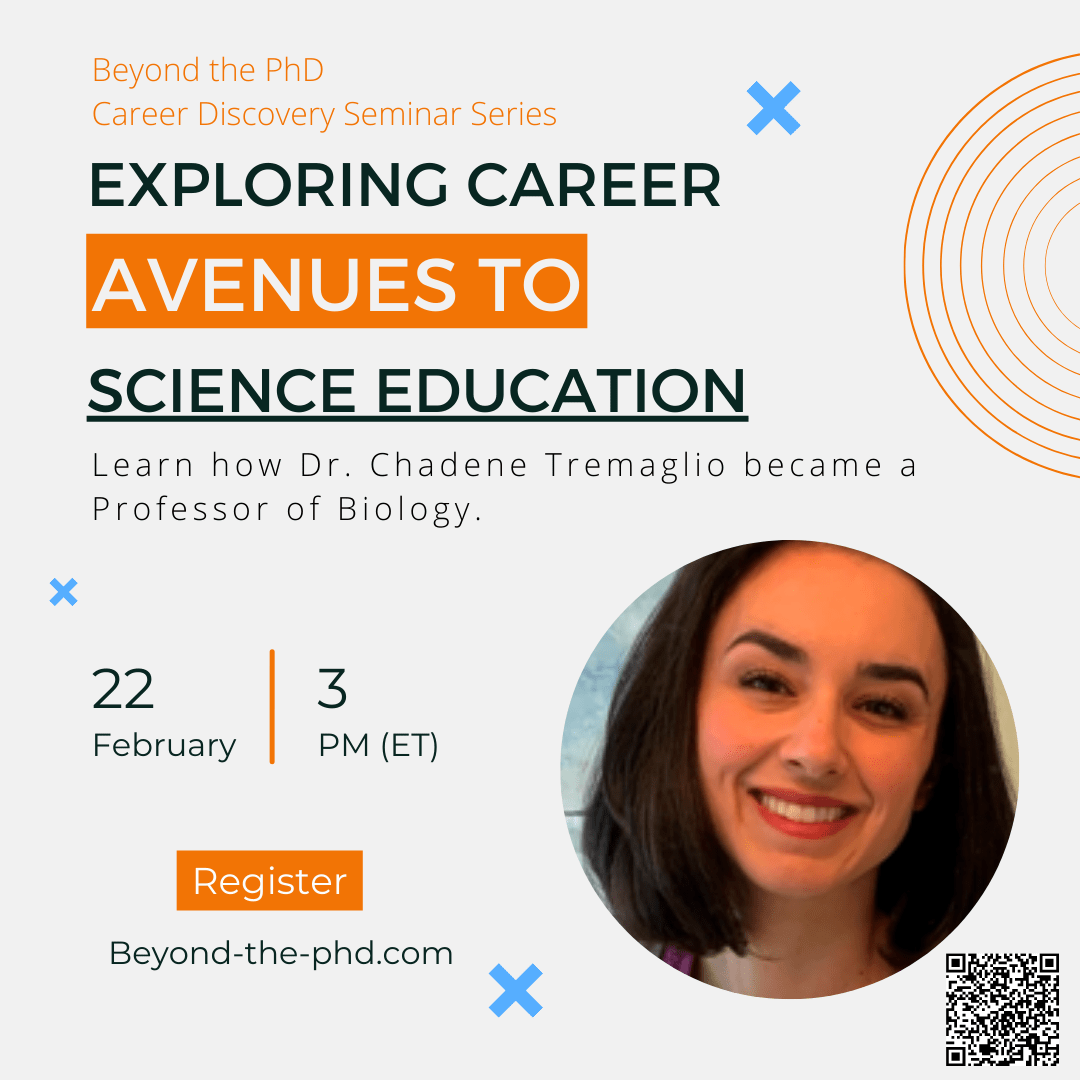
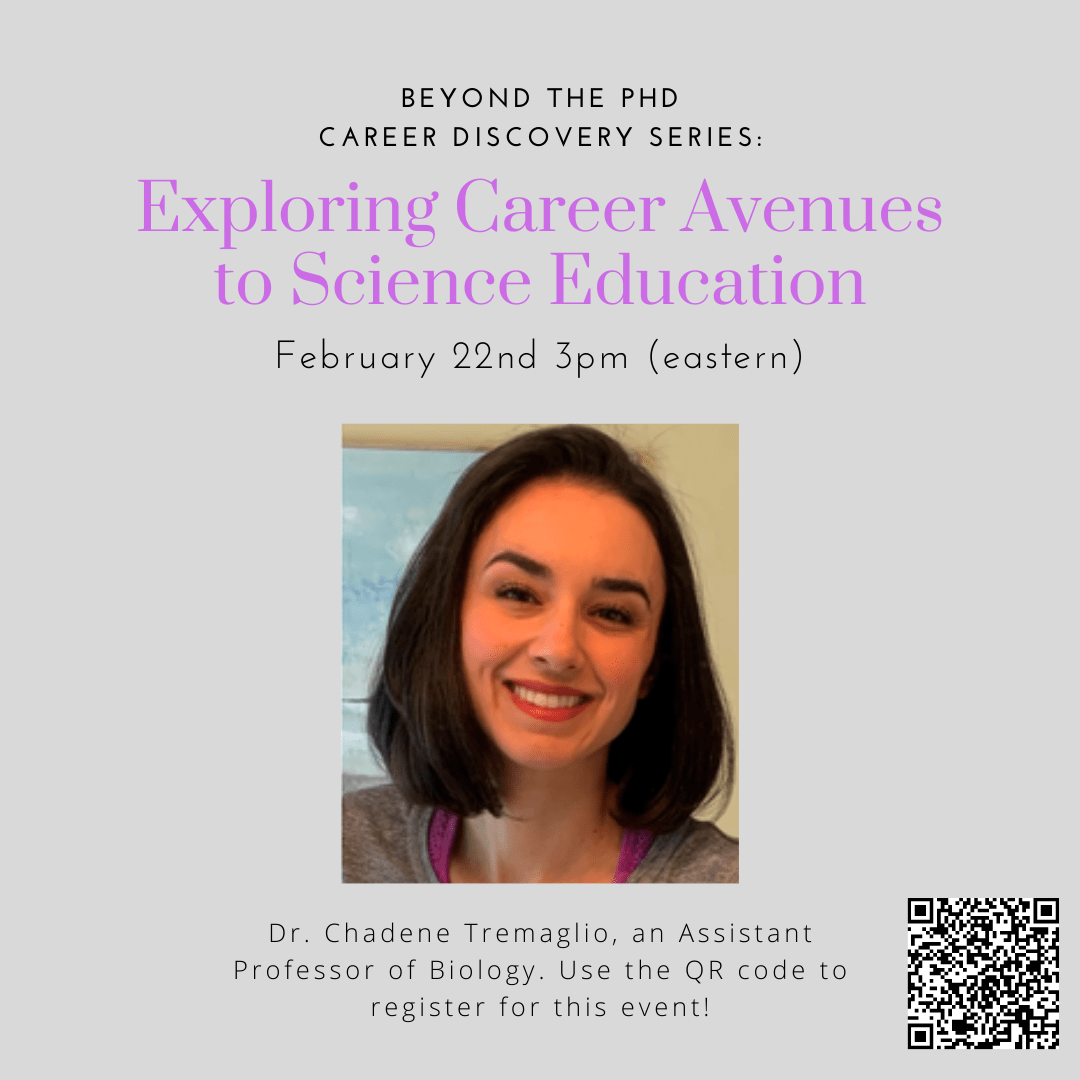
Upcoming Event: Exploring Career Avenues to Science Education

Date: February 22nd

Time: 3pm (eastern)

Beyond the PhD is excited to welcome Dr. Chadene Tremaglio, an Assistant Professor of Biology. Come learn about her diverse career path!

Chadene Tremaglio is an Assistant Professor of Biology at the University of Saint Joseph in West Hartford, Connecticut. She teaches courses on introductory and advanced cell biology, microbiology, scientific writing, and grant writing for biology, nursing and health sciences majors, and maintains a small, undergraduate-driven research lab that works on viruses.

Chadene attended the University of Connecticut for her bachelor’s degree in Molecular and Cell Biology, where she was first bitten by the research bug. She entered as a pre-med student, but within 6 months became fully devoted to laboratory science while working in the lab Graf Laboratory studying biofilm formation of leech gut symbionts. After graduating in 2008, she moved to Boston where she began her PhD studies in Microbiology at the Boston University School of Medicine. There she studied the replication and transcription mechanisms of respiratory syncytial virus in the Fearns Lab. After completing her PhD, Chadene moved across town to do a postdoc at the Dana-Farber Cancer Institute and Harvard Medical School. She studied a putative tumor suppressor protein in high-grade serous ovarian carcinoma, and worked on a small molecule delivery vehicle for a novel epigenetic reprogramming platform.

After finishing her postdoc, Chadene became the “trailing spouse” and followed her husband back to Connecticut for his career, with their two children in tow. She decided to take a break from academia and bench work to test the waters as a ‘work from home’ mom, and explore alternate career options. She spent time as a freelance science writer and illustrator, writing popscience articles and educational guides for online learning platforms. She was also a cohost for the immunology podcast “Audiommunity”. She began adjuncting in 2018, realized teaching was the perfect way to combine her love for science and research with her interests in the arts and communication, and is now in her second year on the tenure track at University of Saint Joseph.

Register here

I have my PhD, now what? – The trials and tribulations of an early career professor

A personal perspectives piece from Founder of Beyond the PhD (formally known as AIOG) Dr. Robert Pijewski.

I started my college career as an industrial technology major, as that was what I studied at my vocational high school. After my first semester, I decided that it wasn’t for me and I changed my major to psychology. I remember watching Discovery Health and literally any documentary about mental health conditions with my mom growing up. I found something that I was passionate about. As most “A” students end up doing, I became a student tutor at my university. To support my college career, I worked full time – one was tutoring, which I Ioved, the other was waiting tables at an assisted living home. I started with one-on-one tutoring and quickly progressed to running walk-in centers for mathematics (a subject that I have always enjoyed learning). From a young age, I was always told that I thought differently from my peers. I soon realized that the way I think and how I thought differently, which was usually viewed as a negative, became a real strength in helping students understand complicated material. How can I harness this and do THIS for the rest of my life? To make a very long story much shorter, I graduated with a second Bachelor’s degree in Biology.

I pursued graduate education and wanted get my PhD in neuroscience. I applied mostly to programs that offered teaching assistantships as I knew I wanted to go into education. I also applied to programs with strictly graduate research assistantships. I ended up attending a university that only had a research assistantship. However, this was not the end of the world, because I was able to find educational opportunities during my studies. For students interested in education but find themselves in strictly research oriented graduate studies, I would advise you to do what I did. Find opportunities to be involved in educational outreach. I was able to give science lessons to the Health Careers Opportunities Program (HCOP) at UConn Health. This program works with middle school students interested in pursuing careers in health and medicine. I also reached out to the program Skype a Scientist, which is a program that let’s you skype into classrooms around the world to talk with students what it’s like to be a scientist, as well as teach them some new concepts. Another thing I took advantage of was becoming a content leader for graduate school courses. I had the opportunity to lead discussions on developmental patterning of Drosophila, and cell signaling in disease. I found myself in a unique and strange position towards the end of my graduate career. Due to the pandemic, we were going to be wrapping up my studies early. One of the best things I did while I was a graduate student was networked. One of my professors connected me with a professor at the University of Hartford, which is where I currently adjunct. I began volunteering my time to help with her own research projects, but we were also able to build a professional relationship and she recommended me to teach her course for the Spring 2021—Developmental Biology. This really opened the door for my ability to gain teaching experience. 

Since that spring, I have taught at three different universities, and have taught 8 different classes. My best advice is to reach out directly to department chairs. Establish a connection with a program. Many advertisements are for faculty pools. On paper, newer educators are all pretty similar to some degree. What really makes a difference is your ability to communicate and work well with others. Faculty at these universities need to see that you would be a good fit for their students. 

Upcoming Event! Exploring Career Avenues to Science Education

Join us on February 22nd to hear about the path to a career in science education from Dr. Chadene Tremaglio.

Chadene Tremaglio is an Assistant Professor of Biology at the University of Saint Joseph in West Hartford, Connecticut. She teaches courses on introductory and advanced cell biology, microbiology, scientific writing, and grant writing for biology, nursing and health sciences majors, and maintains a small, undergraduate-driven research lab that works on viruses.

Chadene attended the University of Connecticut for her bachelor’s degree in Molecular and Cell Biology, where she was first bitten by the research bug. She entered as a pre-med student, but within 6 months became fully devoted to laboratory science while working in the lab Graf Laboratory studying biofilm formation of leech gut symbionts. After graduating in 2008, she moved to Boston where she began her PhD studies in Microbiology at the Boston University School of Medicine. There she studied the replication and transcription mechanisms of respiratory syncytial virus in the Fearns Lab. After completing her PhD, Chadene moved across town to do a postdoc at the Dana-Farber Cancer Institute and Harvard Medical School. She studied a putative tumor suppressor protein in high-grade serous ovarian carcinoma, and worked on a small molecule delivery vehicle for a novel epigenetic reprogramming platform.

After finishing her postdoc, Chadene became the “trailing spouse” and followed her husband back to Connecticut for his career, with their two children in tow. She decided to take a break from academia and bench work to test the waters as a ‘work from home’ mom, and explore alternate career options. She spent time as a freelance science writer and illustrator, writing popscience articles and educational guides for online learning platforms. She was also a cohost for the immunology podcast “Audiommunity”. She began adjuncting in 2018, realized teaching was the perfect way to combine her love for science and research with her interests in the arts and communication, and is now in her second year on the tenure track at University of Saint Joseph.