
If you’ve ever wondered what it’s like to work at a company that uses cutting edge technology to solve some of today’s biggest issues, then the following article is for you. Recently, Beyond the PhD hosted a talk by Todd Jensen, a Manager of qPCR Field Application Scientists at ThermoFisher Scientific. Todd obtained his Masters of Public Health from the Quinnipiac University. Prior to joining ThermoFisher, he was a Research Associate/Lab Manager in the laboratory of Dr. Christine Finck at the University of Connecticut for over 10 years. He began his journey at ThermoFisher in the beginning of 2021, where he was placed in charge of overseeing a team of over 20 Field Application Scientists. Since his arrival, the entire company has expanded from 85,000 employees to over 110,000 following a recent acquisition. With an annual revenue of $40 billion, ThermoFisher is one of the leading industry giants in inspiring innovative technologies for healthcare advancement while also supporting research and development initiatives that promote cutting-edge products. The department that Todd is part of falls under “Global Service and Support” which is comprised of Field Service and Applications, Technical Support, Customer Training, Territory Specialists, Customer Care Service Development, Sales, Marketing and Operations, and Customer Experience. Customers include those from academia and industry as well as applied markets and pharma/biotech services. As a Field Application Scientist, some of Todd’s primary responsibilities include serving as an interface between scientific tools and bench scientists, demonstrating new qPCR technology for labs, providing remote and on-site customer support, giving scientific seminars to large audiences, and becoming a subject matter expert in each application or instrument. Todd also regularly interacts with other teams to coordinate meetings, share new product training tips, and evaluate overall team performance. Since the onset of the pandemic, the responsibilities of his department have extended to providing Emergency Use Authorization (EUA) testing for COVID applications as well as non-EUA testing, which involves wastewater and mutation analyses for COVID variants present in the general population. Because of this work, significant improvements have been made in the diagnosis and prevention of COVID worldwide. These are just a few of the exciting examples that showcase the amazing opportunities Todd and other employees get to be a part of daily. According to Todd, the best piece of advice he has for anyone interested in pursuing a career in industry is to join a company that allows for both professional and personal development, which he has definitely found with ThermoFisher.
Upcoming Event: Academic Careers Off the Research Tenure Path

Not all academic careers follow the research tenure path! Come learn about teaching and admin positions with Giulia and Pamela on February 10th at 3pm (eastern).
Follow us on Eventbrite for more events! https://www.eventbrite.com/o/academia-industry-opportunities-group-30515987020
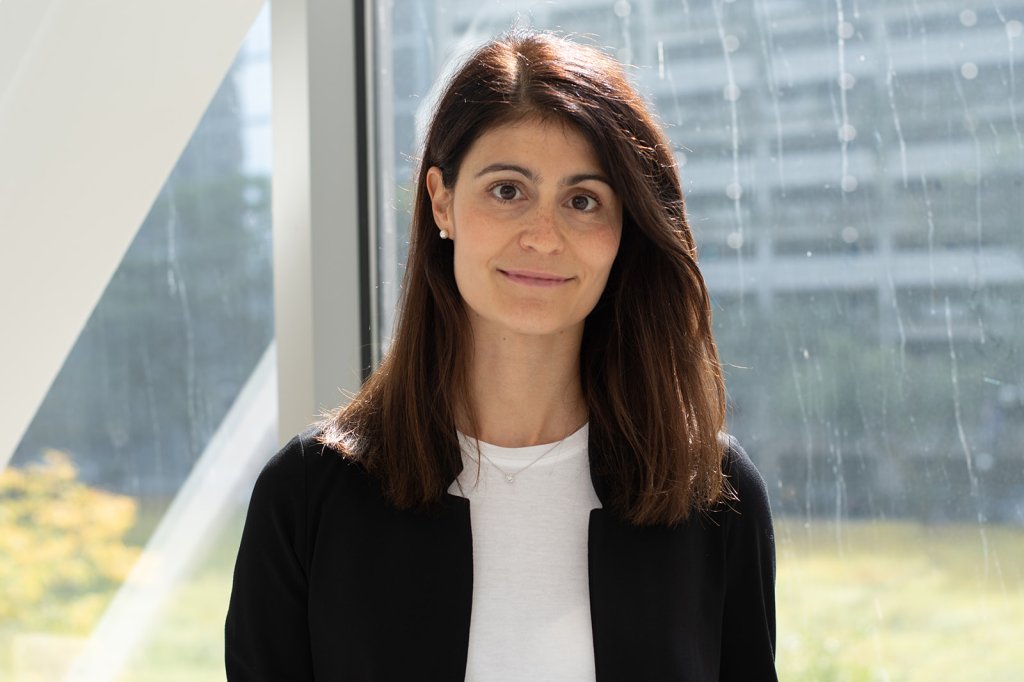
Dr. Giulia Vigone is the Director of MS Student Affairs and a Lecturer in the Master of Science in Reproductive Science and Medicine at Northwestern University’s Center for Reproductive Science. She is a reproductive scientist by training, having earned a Master of Science in Molecular Biology & Genetics and a PhD in Bioengineering & Bioinformatics. After completing post-doctoral research, she continued her career in Higher Education as ad hoc Graduate Faculty. She enjoys mentoring and guiding her students and trainees along their career planning and professional development journeys. During her post-doc, she also co-founded the group hosting this seminar, then called the Academia-Industry Opportunities Group (AIOG).

Dr. Pamela Monahan is the Director of Graduate and Postdoctoral Affairs for the Center for Reproductive Science at Northwestern University. Her responsibilities include being a liaison for grad students and post-docs to help aid in their scientific and career development goals. She also assists in direction of the Center’s NIH funded predoctoral training grant. In addition, Dr. Monahan is a Lecturer for Northwestern’s Feinberg School of Medicine, specializing in various reproductive biology labs and classes. Prior to her current roles, Dr. Monahan received a Bachelor’s degree in Biological Sciences from the University of Tennessee-Knoxville and both a Master’s degree and PhD in Molecular and Integrative Physiology from the University of Illinois-Champaign.
Printing new horizons: a career in bioprinting
Three-dimensional printing (3D printing) also known as additive manufacturing or rapid prototyping, was first described in the 1980’s. Over the past several decades, the field has exploded to include a plethora of technologies that are applied in manufacturing (3D printed lug nuts), construction (3D printed buildings), and medicine (tissue regeneration). The application of 3D printing in medicine has led to the advancement of tissue regeneration by way of technologies that print tissues and organs using biological material. The field of 3D printing in the healthcare and medical device sector is rapidly advancing with a global impact. In the US specifically, the healthcare and medical devices 3D printing sector is projected to increase in industry value from $60 to $90 billion value with more than half a million new jobs created over the next 10 years (more information can be found here).
In December, Beyond the PhD had the pleasure of hosting Ms. Taciana Pereira, Vice President and General Manager, 3D Systems Corporation to share her journey and discuss careers in tissue engineering. Her interest in tissue engineering began as an undergraduate student researcher at the Wyss Institute for Biologically Inspired Engineering, Harvard University. After receiving her Bachelor of Science degree from Harvard University in 2017, she was hired by Allevi as a bioengineer. Allevi was a startup company based in Philadelphia, Pennsylvania that developed “versatile and easy-to-use bioprinting technologies” for biomedical research. Quickly she rose through the ranks from Bioengineer to Director of Bioengineering and eventually to Chief Scientific Officer. The company was later acquired by 3D Systems where she is currently employed.
Her experience in the startup sphere illuminated the explosive growth in bioprinting over a few years; from a few dedicated companies in 2016 to more than 100 companies around the globe today. She described the advantages of working in a startup compared to a larger pharmaceutical company or in academia. For example, while working at Allevi, she was able to simultaneously work on several aspects of the product development including research, strategy, commercialization, and business development. She had also shared information about entrepreneurship training programs sponsored by venture capitalist firms that helped her develop a business plan for fundraising for Allevi.
Currently Ms. Pereira leads the lab bioprinting vertical at 3D Systems that has several projects spanning bioink development, 3D cell culture, soft and hard tissue engineering, and disease modeling. One example of the disease modeling application is the novel tumor-on-a-chip model that had both vascular and lymphatic vessels developed by Dr. Yu Shrike Zhang from Harvard University who was a scientific adviser at Allevi. She concluded her talk by saying that for graduate students interested in a career in bioprinting should pursue the field out of passion and to not be discouraged if you don’t have direct research experience because this field is relatively novel.
Pro-tip: Never hesitate to cold call or reach out to different companies using Linkedin.
If you are interested in learning more about this field feel free to contact her at taci.pereira@3dsystems.com.
Recording of this seminar:
PhD Transparency

Natalie Sandlin graduate student at Boston College and coordinator of the Beyond the PhD Ambassador Program shares her thoughts on approaching career exploration
At this point in my PhD journey, half way through my 4th year, I am starting to think more in depth about what the other side of getting my PhD looks like. To be honest, I’m still not fully confident in my answer…
When I entered my graduate program, I didn’t have much thought about career prospects. I was finishing up my undergraduate degree, a little lost on career options, but knowing I loved microbiology. I looked to grad school as a way to further my knowledge in a field I was passionate about while giving myself some time to research jobs that might interest me. While my reasoning to get my PhD might not have been the best, I am grateful for the time I’ve spent in my program and all the knowledge I have gained along the way. So far, grad school has given me insight into various career paths that I can pursue post-PhD.
My two favorite aspects of research are being hands-on in the lab and overseeing my undergraduates’ projects. Something graduate school made me realize about myself is that I get excited to run a new experiment or troubleshoot a problem in the lab. Also, discussing science, planning the next steps of an experiment, and analyzing data with undergraduate researchers is very engaging for me. On the other hand, I also have learned that classroom teaching is not for me. Being a TA, while bearable, was one of the things I least looked forward to each week. Through this experience, I decided staying in academia is probably not the best option.
So where does that leave me in terms of future jobs? Still not confident, and that’s okay. I think a good fit for me is to go into industry. That likely means starting as a bench scientist and then moving into a more managerial role. However, without any real experience in anything besides academia, I don’t feel truly confident in that answer either. I’d like to feel more comfortable when answering the dreaded, “What do you want to be when you grow up?” and therefore, I plan on taking more concrete measures to figure it out. My current short-term goal is holding informational interviews with professionals in roles I might be interested in. Ideally, this will help me gain insight into whether I’d enjoy pursuing a similar career path.
While I may not have it all figured out, what I’m really trying to say is that it’s okay to not fully know what your dream job is and to learn as you go.
Upcoming Event: Todd Jensen at Thermo Fisher Scientific
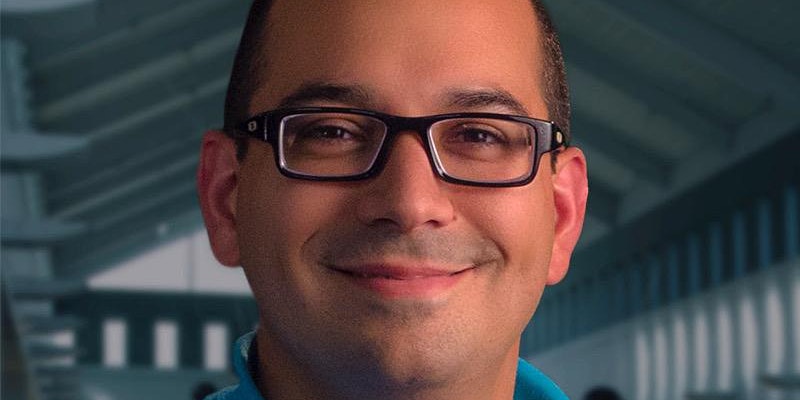
Beyond the PhD welcomes Todd Jensen, a Manager of Field Application Scientists at Thermo Fisher Scientific. Come hear about his career path on Thursday January 20th at 2pm ET.
Todd Jensen is a Manager of Field Application Scientists in the Northeast and MidAtlantic for Thermo Fisher Scientific. These scientists provide training and support for our qPCR instruments and assays including all EUA approved COVID testing kits.
Todd began his research career at Yale University in 2007 as a Research Technician studying transplant rejection in humanized mouse models. He then joined the Finck Laboratory at the University of Connecticut School of Medicine in 2010. He studied tissue engineering and regenerative medicine approaches to pediatric lung disease and esophageal defects. Todd progressed to the role of Research Associate 2 and Laboratory Manager as well as a surgical research advisor for surgical disciplines at CT Children’s.
Shortly after he began his research career, he began to teach as adjunct faculty at private colleges and then the states community college system. This year will be 14 years as an adjunct instructor where he continues to teach human biology lecture courses online.
He is originally from Farmington, CT and attended Sacred Heart University where he graduated with his bachelor’s in biology & Chemistry. Todd then went on to receive a master’s in health science from Quinnipiac University in Medical Laboratory Sciences. He is currently completing his master’s in business administration with an anticipated graduation date of June 2022.
Join us this Thursday Jan. 20th to learn more about Todd’s career path.
Career Spotlight: Clinical Research Associate

Recently, Beyond the PhD had the opportunity to sit down with Jason Torres, a Clinical Research Associate (CRA) at Roche, where he shared his background and experiences working in this industry position. Jason discussed his role as a CRA and covered the responsibilities this job entails. CRAs act as a main line of communication between sponsor, in his case Roche, and investigator. They also visit and work with clinical sites on behalf of the sponsor. The CRA performs a variety of clinical operations and monitoring activities to help studies run smoothly and be successful. Other common names for this role are clinical monitor or study monitor. Some additional responsibilities of a CRA include assessing the feasibility of a trial, recruiting investigators, pre-study visits, site initiation visits, routine monitoring visits, and site close out visits.
Jason went into further detail about day to day responsibilities as a CRA. He discussed how the work load comes in waves, with kicking off a study being the most intensive. There is a large amount of prerequisite work involved including designing the protocol and everything else needed to initiate a large scale study. Day to day he is involved in communicating with the sites that he oversees, having team meetings, and dealing with regulatory documents. It’s a collaborative environment and he learns something new from each trial. He is also involved in contracting with the site, budget negotiation, and working with the warehouse team to provide supplies to the sites. He is currently working with six sites, but this number depends on the scale and magnitude of the trial.
Jason also described his path to becoming a CRA. He mentioned that he interned at Roche during college and enjoyed the company environment and internship program. He maintained connections at Roche while completing his undergraduate and graduate degrees and later applied to work at the company. The fundamental lab experience that he gained as an undergraduate researcher and master’s student helped him transition into this role and provided a solid foundation for running a trial. Jason started as a contractor for Roche in 2017 and later was brought on full time as a CRA 1. He moved up the ladder and is now a senior CRA. The next step in this career path is becoming a study manager. In this position, you are more involved in managing junior CRA’s, mentoring, and teaching.
Jason concluded by discussing the education and experience that would make someone well suited for a job as a CRA. He mentioned that many people transition from working on a clinical trial as a study coordinator to working as a CRA. The majority of CRA’s only have bachelor’s degrees. However, at the more senior level, many employees have master’s degrees or PhDs. However, Jason said that getting his master’s allowed him to get a better understanding of scientific experimental design and a solid scientific foundation before transitioning into his role as a CRA.
Career as Manager of Field Application Scientists
Beyond the PhD welcomes Todd Jensen, a Manager of Field Application Scientists at Thermo Fisher Scientific. Come hear about his career path on Thursday January 20th at 2pm ET.
Todd Jensen is current a Manager of Field Application Scientists in the Northeast and MidAtlantic for Thermo Fisher Scientific. These scientists provide training and support for our qPCR instruments and assays including all EUA approved COVID testing kits.
Todd began his research career at Yale University in 2007 as a Research Technician studying transplant rejection in humanized mouse models. He then joined the Finck Laboratory at the University of Connecticut School of Medicine in 2010. He studied tissue engineering and regenerative medicine approaches to pediatric lung disease and esophageal defects. Todd progressed to the role of Research Associate 2 and Laboratory Manager as well as a surgical research advisor for surgical disciplines at CT Children’s.
Shortly after he began his research career, he began to teach as adjunct faculty at private colleges and then the states community college system. This year will be 14 years as an adjunct instructor where he continues to teach human biology lecture courses online.
He is originally from Farmington, CT and attended Sacred Heart University where he graduated with his bachelor’s in biology & Chemistry. Todd then went on to receive a master’s in health science from Quinnipiac University in Medical Laboratory Sciences. He is currently completing his master’s in business administration with an anticipated graduation date of June 2022.
Join us on Thursday Jan. 20th to learn more about Todd’s career path.
Save the Date! Spring 2022 Networking Event

This spring we will host our Annual Networking Event on March 17th from 5:30-7:30pm ET using the Gather.Town platform.
The goal of our networking event is to provide a platform for graduate level trainees and upper level college students to network with a diverse panel of STEM professionals in both academia and outside of academia.
“Building your brand.”
The theme for Beyond the PhD’s 2022 Networking Event
We chose this theme in order to help students and trainees learn best practices for identifying and promoting their personal brand to be effective during the job search process. To achieve this goal (1) we will host a variety of STEM professionals with diverse career paths and (2) invited Amy Aines to give a Keynote presentation on how to effectively communicate.

Amy Aines is the Founder of Talking STEM- Building Vital Communication Skills to Launch Successful Career. She is a communications strategist, coach and trainer. She creates workshops and curriculum to teach STEM graduates and early career professionals vital communication methods for effectively championing their ideas and building support for their work. She also teaches essential success skills for the workplace that most scientists, technologists, engineers and mathematicians didn’t learn in graduate school.
Additional information about the event including registration link and list of professionals will be released closer to the event date.
If you are a STEM professional interested in participating in this event please click the button below to fill out a brief form.
-Beyond the PhD Networking Event Planning Committee
Happy New Year!

Everyone at Beyond the PhD wishes you all a happy new year. We hope you had a safe and enjoyable holiday among family and friends. Check out some of our upcoming events!
14
January2022
Deadline to apply to be a campus Beyond the PhD Ambassador for Spring 2022 Undergraduate upperclassman or
graduate students in a STEM field interested in taking
leadership roles at their college or university. Apply here
graduate students in a STEM field interested in taking
leadership roles at their college or university. Apply here
20
January2022
Todd Jensen from Thermofisher Scientifichttps://www.linkedin.com/in/todd-jensen/. Eventbrite sign-up coming soon.
3pm ETZoom

Navigating Science Conversations with Non-Scientists: Holiday Edition

By Natalie Sandlin and Rachel Gilmore
For many of us, the winter season, and the various holidays throughout, mean spending extra time with family. With this time comes the sometimes-dreaded questions: “What do you do?” or “What are you researching?” This may afford us the opportunity of discussing science-related topics with individuals who may not be so familiar with science, and rather than approaching these conversations with resistance or fear, we’ll give you some helpful tips for the best way to navigate science conversations with non-scientists. Let’s chat about it…
- Know your audience.
A good question to ask yourself going into the conversation is, “How likely is it that this person has encountered this information before?” If you honestly have no idea what level of understanding the other individual has, just ask! It’s as simple as saying, “Have you ever heard of [blank]?” or maybe, “How much do you know about [blank]?” This can save time and confusion for everyone.
- Keep it relatable.
Give people a reason as to why others should find what you do interesting. People tend to be more invested in the conversation if they feel like the topic is something directly relevant to them. Consider using stories or analogies that are easy to relate to.
- Think big picture.
Too many details can be overwhelming for anyone. I like to follow the format: issue being addressed, how we can address it, and what my contribution to the solution is. This gives enough information about the science without going overboard on the details.
- Avoid jargon.
Always remember, keeping things simple is not “dumbing down” your science. You don’t have to over-inflate your vocabulary or get into technical jargon to appear smarter. Chances are, the people you’re talking with already think you’re brilliant anyway.
- Listen to understand, not to respond.
When the person you’re talking to asks a question or makes a comment, be sure to take a second to understand what they’re actually saying before blurting out a response. A tip for doing this is to repeat the question back to the person in your own words. For example, “So if I’m understanding correctly, you’re asking [blank]?” This will not only force you to listen to what they’re saying but also to ensure you’ll answer the question they’re actually asking and not just one you think they’re asking. Also, tone is very important when responding. Some family members may have different views, opinions, or educational level than your own, so it’s important not to come off as judgmental or condescending. You want them to continue to engage in science after your conversation, not shy away from it!
- Let your passion shine through.
A super easy way to get other people invested in the conversation is to show them how much you care about what you do. They likely will not remember all of the details of what you talked about, but something they may remember is your expressions or how you made them feel during the conversation. There is a reason you are invested in your project, and people want to know why you care about what you research.
- Keep it short.
Regardless of how interesting or relevant something is, it’s best to keep your conversation short, sweet, and to the point. Let the other person lead the conversation deeper, if that’s what they want, but don’t impose a lengthy monologue of your research where it isn’t needed or wanted. Think of this as a time to practice the elevator pitch of your project, benefiting both you and the other person in this conversation. Most of all, enjoy this time you have, take a break, and relax. Happy Holidays, everyone!
 Beyond the PhD