

Are you an undergraduate or graduate students in a STEM field interested in taking
leadership roles at their college or university?
RESPONSIBILITIES:
Distribute seminar information
Make and/or share flyers for events
Post on social media
Attend monthly virtual ambassador meetings
Invite speakers to give informational career seminars
Write blog pieces on topics of your choice
Use the QR code on the flyer below to apply or send us an email!
If you have a passion for both science and art, then you may want to watch the following seminar that details the exciting and rewarding pathway to becoming a successful Medical Illustrator. At the beginning of November, Beyond the PhD hosted a talk by Ni-Ka Ford, a Medical Illustrator from the Icahn School of Medicine in Mt. Sinai, NY. At the University, she is part of a collaborative ISMMS Instructional Technology Group (https://libguides.mssm.edu/itg), that conceptualizes and develops medical and scientific illustrations meant to engage researchers, students and the general population. Her work ranges from the development of scientific illustrations and animations to 3D anatomical models that can be used for education, patient care, public relations and marketing. She even showcases some of her amazing work, which includes illustrations for medical textbooks, mock journal covers, information pamphlets for WIC clinics as well as the creation of 3D animated structures for Virtual Reality simulations. A particularly fascinating part of her presentation is when she shows an example of how realistic 3D animations can be developed and utilized to facilitate client and patient education (https://www.youtube.com/watch?v=L2EHj6_qgHU).
Another intriguing aspect of her talk is when she describes how there is a lack of diversity within the field and how historically, minorities are underrepresented in scientific and medical illustrations. In her own work, she highlights the importance of portraying people of color to aid in the elimination of damaging health disparities that can arise from misrepresentation. In addition to her role as a Medical Illustrator, she serves as the chair of a Diversity Committee sponsored through the Association of Medical Illustrators or AMI. One of the ways this committee advocates for increased diversity is through the support of educational activities that teach inner city youth about the profession in hopes of bringing individuals with various backgrounds into the field. For anyone interested in pursuing a career as a Medical Illustrator, she encourages individuals to visit the website for the Association of Medical illustrators https://www.ami.org/. This site is a wonderful resource that provides information on what it takes to become a Medical Illustrator and what types of accredited Universities offer programs for certification. The website also provides opportunities for networking and mentorship by sponsoring an annual meeting that allows individuals in the profession to get together and showcase their work.
You can follow her work on Instagram @ n_biovisuals as well as work from the Association of Medical Illustrators @amidotor
Her website: www.nikaford.com
To listen to the full interview with Ni-Ka Ford search under the “Interviews and Recordings” section of the website for “Biomedical Illustration and Visualization”.
Join Beyond the PhD in welcoming Jason Torres, a Senior Clinical Research Associate at Roche Diagnostics. Come learn about his career path!
Jason Torres is a Connecticut-native that obtained his Bachelor of Sciences Degree, Physiology and Neurobiology, at the University of Connecticut, while actively researching women reproductive health via a Drosophila model system. After his undergraduate degree, Jason pursued his Master of Sciences Degree, Cellular and Molecular Biology, at the University of New Haven researching resistant forms of B. burgdorferi, the Lyme disease causing bacteria. With a growing interest in clinical research, Jason pursued a career in industry, specifically in clinical operations. Jason is currently a Senior Clinical Research Associate at Roche Diagnostics in Pleasanton, California. Responsibilities for this role include monitoring molecular, sequencing and tissue in vitro diagnostic (IVD) clinical trials in accordance with ICH guidelines, good clinical practice (GCP) and regulatory agency compliance for FDA submissions.
Beyond the PhD recently had the pleasure of hosting Dr. Jared Kehe, co-founder and Chief Scientific Officer (CSO) of Concerto Biosciences, a company focused on creating microbial ensembles to rehabilitate poorly functioning microbiomes with impacts from human health to the food industry. Dr. Kehe pulls on his foundational background in bioengineering, particularly his PhD work developing the kChip, to lead his startup toward discovering microbes working in concert.
Dr. Kehe spoke about the process of taking research and technology developed during his graduate work and turning it into the basis of his company. This transition from academic work into the industrial sector imposes a mindset shift for the whys and hows of research. One of the key shifts is the incentive structure: the focus of research shifts toward where a market need is seen and it is necessary to adapt from basic scientific concepts to a true demand for a product. Within this shift, there needs to be a consideration of the gap in the market where current products fail and a new, better product can be introduced. Dr. Kehe shared this valuable insight while discussing his own shift from the development of a high-throughput microfluidic screening device (kChip) to answer basic questions surrounding microbial interactions toward using this screen to discover microbial “ensembles”—combinations of microbes that can be deployed as therapeutics against diseases like eczema, a condition that lacks a safe and efficacious long-term solution.
As a CSO, Dr. Kehe interfaces with many individuals. He provides the expertise in regard to technology and vision of the company to potential investors and serves as the point of contact for vendors and contract research organizations to effectively communicate the development of the science and technology. Additionally, Dr. Kehe points out that in the rising field of microbiome research, industry is highly collaborative, so talking with CSOs, CEOs, and scientists at other companies is a normal task.
In our discussion, Dr. Kehe emphasized the importance of teamwork in industry: from day one of a startup, it is all about strategic delegation of roles and responsibilities across the team. Unlike academia, where collaboration and teamwork is beneficial but not necessary to accomplish your research, industry, and in particular startups, rely on the proper support structure of the team behind the company. When asked how one should go about building the startup team, especially finding people fit for roles such as business advisors, Dr. Kehe spoke of the crucial role networking plays in meeting the right people. One of the pivotal networking opportunities that aided in building his own startup team was through Nucleate (https://nucleate.xyz/), a program geared towards educating and mentoring the next generation of bioentrepreneurs. Nucleate has several locations around the country and offers resources and training to biotech founders. Outside of this program, Dr. Kehe suggests looking for workshops or clubs in your area that teach about entrepreneurship and offer networking events to kickstart the move into industry.
Lastly, a big question and potentially a concern for people thinking about creating a startup is where funding is going to come from. Dr. Kehe gave great examples of how to kickstart funding: grants through the NSF or NIH, local competitions for startups, angel investors, and venture capital firms. Highlighted in his talk was the Activate Fellowship (https://www.activate.org/home/), a two year fellowship that provides mentorship and funding to help turn a technology concept into a product. Currently under this fellowship, Dr. Kehe spoke of the immense benefit this program has had in creating Concerto Biosciences and providing support to him as a co-founder. If looking to undergo your own shift from academia to creating a startup, Dr. Kehe’s take home advice is to look for resources to educate you about entrepreneurship, and to further look into some of the resources highlighted in this piece.
To learn more about Dr. Jared Kehe and the exciting work of Concerto Biosciences, listen to the full interview under the “Videos” section of our website or check out the company website at https://www.concertobio.com/.
Image location: https://favpng.com/png_view/new-company-ad-symbol-microbiology-biotechnology-png/jDb2VtDP
Join Beyond the PhD in welcoming Jason Torres, a Senior Clinical Research Associate at Roche Diagnostics. He will be sitting down with Beyond the PhD (AIOG) on Monday November 15th from 2-3pm ET.
Jason’s Bio-
Jason Torres is a Connecticut-native that obtained his Bachelor of Sciences Degree, Physiology and Neurobiology, at the University of Connecticut, while actively researching women reproductive health via a Drosophila model system. After his undergraduate degree, Jason pursued his Master of Sciences Degree, Cellular and Molecular Biology, at the University of New Haven researching resistant forms of B. burgdorferi, the Lyme disease causing bacteria. With a growing interest in clinical research, Jason pursued a career in industry, specifically in clinical operations. Jason is currently a Senior Clinical Research Associate at Roche Diagnostics in Pleasanton, California. Responsibilities for this role include monitoring molecular, sequencing and tissue in vitro diagnostic (IVD) clinical trials in accordance with ICH guidelines, good clinical practice (GCP) and regulatory agency compliance for FDA submissions.
Are you interested in exploring how science can have a real world impact and transform millions of lives across the globe? Do you want to engage with governments and the larger public society to promote scientific research and develop policies that improve overall global health? If you answered yes, then a career in science policy could be your calling.
This past spring, we interviewed Dr. Megan Miller, a program officer and strategic advisor at United States Agency for International Development (USAID). Before working at USAID, Dr. Miller earned her PhD in Biomedical Sciences from UConn Heath and later completed a postdoctoral fellowship at the Yale School of Medicine. After , she was awarded a highly competitive Science and Technology Policy Fellowship (STPF) from the American Association for the Advancement of Science (https://www.aaas.org). The STPF application opens in the Fall semester and closes annually on November 1st every year. To be eligible for the year-long fellowship, candidates must be US citizens and hold either a doctoral or master’s degree. More information can be found on the program’s website (https://www.aaas.org/programs/science-technology-policy-fellowships).
Her role at the USAID
USAID is the world’s premier international aid organization and works primarily in 100 low-income countries. With their headquarters in Washington D.C, most employees are stationed at local stations across the world and work their local communities to improve the quality of life through programs that promote agriculture and food security, global health, education, democracy and sanitation. Dr. Miller worked as a Program Director in the Innovation, Technology and Research hub (ITR) which aims to leverage scientific research for improving developmental outcomes. This is achieved by providing research grants and cooperative agreements for capacity building and collaboration between research groups in the US with international programs. This division of USAID is also tasked with providing technical support to various stakeholders such as research groups and universities in low-income communities.
What responsibilities does her job/fellowship entail?
Transferable skills from a Biomedical Sciences PhD program to career in Science Policy
While the job may not entail using the very specialized wet-lab knowledge developed during the course of a science focused PhD program, there are several transferable skills that are gained that can be applied in a science policy career-
Resources for other science policy fellowships in the US:
This article was written by Sai Nivedita Krishnan, A Biomedical Sciences Doctoral pre-candidate at the University of Connecticut at the Farmington, CT campus.
As I write this, cuddled up on my couch, with Monday night football playing in the background and my cat puttering about the condo, it’s easy to think dreamily about future jobs in new places with larger salaries and reassure myself that pursing a PhD was the right choice and that it will be worth it. Other times, it isn’t so easy to dream about the future. There are nights when you’re in lab until the sun has long since gone down, when you haven’t stopped moving long enough to eat lunch, and when you’re running on caffeine and feigned optimism. Those times make it a lot harder to believe that this whole journey will be worth it.
I’ve recently referred to the current status of my thesis as a dumpster fire before presenting my research updates in lab meeting. My advisor was quick to rebut me, and explained how the physical product of a thesis is nothing more than really checking off a requirement for graduation. Reducing something I’ve now spent over two years of my life on to a check box immediately triggered my “fight” response, but thankfully I kept my mouth shut long enough to truly listen to her explanation. She said that even if our hypotheses are null, it’s the process that matters. At the end of the day, I’m not doing all this work to write a thesis; I’m doing it to help people, to contribute new knowledge to my field. I may not (and likely will not) crack the code to the syndrome I study, but hopefully I can add my small piece of meaningful information to the puzzle.
After I gave my research update in that lab meeting, my advisor brought me back to the words I opened with that morning – dumpster fire. I had just presented for two hours about all the work I’ve done these past few months and all I could see is failed experiment after failed experiment. My advisor changed my perspective by reframing the failed experiments as disproven hypotheses – that this work, though it feels messy and scattered was necessary to propel us into what questions we’ll ask next. This reassurance was all I needed to reflect on all the things I’ve learned so far in my graduate career. I came into the program with very little research experience. Now I not only plan and manage my own experiment load but actively mentor other students and staff who move through our lab, while taking the lead on collaborations with other labs.
I still have no clue what I want to be when I grow up (it honestly changes day to day), but I’m currently working on honoring my progress thus far and having a brighter outlook for the future. Potential career options I ponder include returning to my forensic science roots in a DNA lab or transitioning to an industry job at a therapeutic company. Until then I plan on embracing the PhD journey, even on the days that it feels like a dumpster fire.
Rachel is a third year PhD candidate in the Biomedical Science program at UConn Health. She studies a rare neurodevelopmental disorder, Prader-Willi Syndrome, using stem cell and stem cell-derived neuron models. Outside of lab, she enjoys hiking, yoga, good food, and snuggling with her cat.
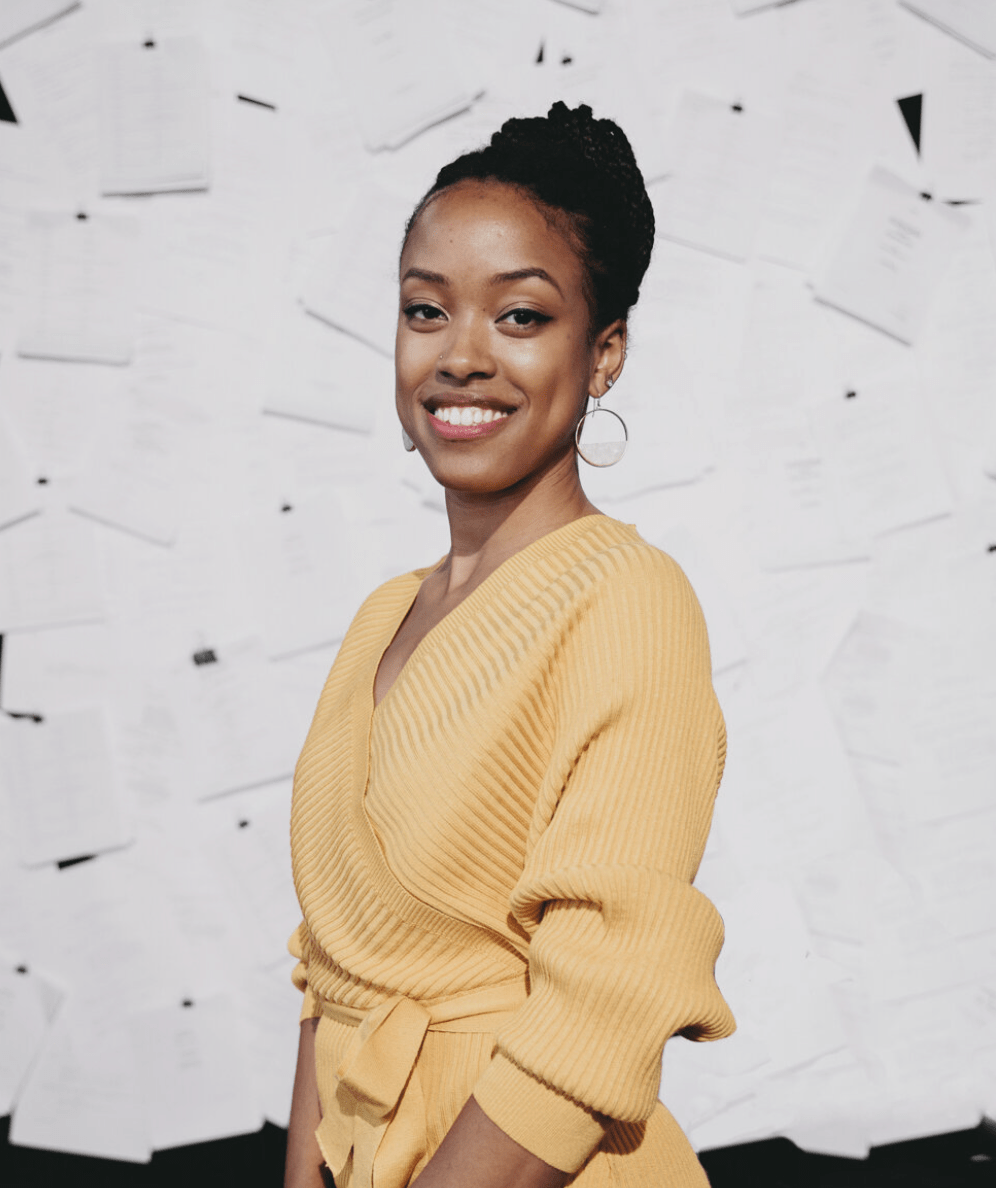
Ni-ka is an Academic Medical Illustrator for the Icahn School of Medicine at Mount Sinai in New York. She creates didactic illustrations and 3D visualizations for scientific research, medical education, and patient education. An Atlanta native, Ni-ka graduated from Georgia Southern University with a Bachelor’s in Fine Arts. She continued to develop her portfolio while taking science courses as a post-baccalaureate student before matriculating at the University of Illinois at Chicago where she graduated with a Master’s of Science in Biomedical Visualization in 2017. Her goals include improving health literacy and contributing to the growing need for inclusive and diverse representation within medical and healthcare literature. She is currently the Chair of the Diversity Committee within the Association of Medical Illustrators and a Co-organizer for the SciVizNYC annual conference.
Check out some of her work on Instagram @n_biovisuals or on her website!
In March of 2021, AIOG had the pleasure of hosting Dr. Fiona Watts who is a Director for Stem Cells and Regenerative Medicine at Kings College London. She also happens to serve as the Executive Chair of the Medical Research Council in the UK. Dr. Watt’s research focuses on the interplay between internal and external factors in the regulation of stem cell fate.
In the Spring she spoke on the many scenarios that she uses her expertise in scientific communication to increase the accessibility of science to the public. I was particularly drawn to this talk, as I am always looking for ways to improve how I communicate my research to colleagues and friends. In the past, she has helped to communicate scientific goals and ideas through non-profit organizations such as Versus Arthritis, as well as government agencies seeking advice about the use of human embryonic stem cells. She also described her collaborations with artistic communities to present science in new and exciting ways, which I thought was a particularly innovative approach to increase the accessibility of science to all ages.
As the Director for Stem Cells and Regenerative Medicine at Kings College London, Dr. Watts participates in several projects that aim to make basic research fun and inspiring to students of all ages. She promotes public engagement in science through social media avenues (wattlab | home) ,a seminar series called “Stem Cells at Lunch” that encourages colleagues to come together and discuss their work, and she even has a YouTube channel (Watt Lab 1) designed to help scientists improve their communication skills.
In this talk with Beyond the PhD (AIOG), Dr. Watts emphasized the importance of communicating science to the public through networking, which will provide researchers the opportunity to learn new skills and improve how they present their work to the public. She also provides excellent advice on best methods to target your audience including using language that is both collaborative and respectful of audiences without expert level knowledge of science. Overall, this talk is beneficial for anyone interested in pursuing a career in scientific communication or those seeking better ways to present their research in a broader, more relatable context.
To listen to the full interview with Dr. Watts search under the “Interviews and Recordings” section of the website for “The Importance of Scientific Communication with Fiona Watts”.




 Beyond the PhD