Are you ready to take your academic journey to the next level? Beyond the PhD is thrilled to present a fun and helpful event just for you! This autumn, we’re rolling out our Graduate School Application Office Hours, and you’re invited!
Our Graduate School Application Office Hours are available from October 25 through November 17. So, don’t wait – book your session now and set your academic journey in motion! You will only be able to schedule 7-days in advance so that we can pair you with the right team member.
On our website, we have also included helpful resources and sample materials to help guide you in your application process.
📚🍁 What’s in Store for You? 🍁📚
📋 One-on-One Application Review: We’ve got your back! Sign up for a 30-minute session and let our expert Beyond the PhD team members review your application materials. They’ll provide valuable insights, tips, and suggestions to make your application shine like a freshly fallen leaf.
🤓 Personalized Guidance: Have questions or need advice about the application process? Meet with us to discuss everything from choosing the right program to tackling the dreaded personal statement. We’re here to support your academic dreams!
The Beyond the PhD Team contacted members of different Graduate School Admissions Committees to ask for their advice for students applying to programs. We have provided their tips for the application process below, as well as a summary at the bottom.
Advice from Review Committee #1
Research experience is extremely critical. The more experience you have, the better your chances. Publications are useful, but your research experience is what will get you an interview/acceptance.
Reference letters are often given more weight than your personal statement in your application. Schools receive hundreds of applications each year, and your personal statement is often less scrutinized than your reference letters. If you have worked in the industry and have a good relationship with someone higher up in the company, approach them and ask them if they would be willing to write one for you.
Resumes are the perfect place to show everything you have accomplished in a succinct way.
Personal statement, while important, is not the thing that makes or breaks your application. Having said that, steer away from generic “I love science” “When I was a child” “I know someone with this disease” lines. Talk about your research experiences and how graduate school will help you become a better scientist. Look up professors and labs that align with your research interests and mention them in your statement.
Advice from Review Committee #2
When initially reviewing applications, how do you decide which ones are worth a second glance? This is often a combination of multiple factors. Our department is relatively small and relatively diverse in research topics, and it only accepts PhD students. Given these considerations, we look for applicants who show that they know what a PhD program is like, know what their career goals are, and are prepared to take on PhD projects, which by nature are complex and involves quite a bit of uncertainty.
Are there any metrics that take precedence over others, or that are weighted more? In reviewing an application, we are given a limited set of information about the candidate to make a decision. For me, it is important that they are consistent, committed, and self-aware. It’s ok for example if a few grades are not good or if someone has limited research experience, as long as they understand their own strengths and weaknesses and are committed to work on their own improvement.
What makes a candidate stand out? A track record of productivity in different contexts usually puts the evaluators’ mind at ease that the person has the tools and will to handle different situations. Overcoming hardships is another impressive factor. Lastly, clarity of thinking is important in my opinion, when someone knows what they want and why attending graduate school is the right next step for them.
What makes a personal statement stand out? To me, the clarity of writing. The personal statement is the one place that the applicant has the space to tell the evaluators what they are about. Tell us why you. I have seen many personal statements that are essentially their CV and accomplishments in sentences. I find those less helpful, because they don’t offer any new information.
Do you consider how the applicant would fit into the program itself, rather than just whether they are qualified/ready for graduate studies? Absolutely. This is a big part of the decision. Are they a good for the research programs offered in the department? Do they appear dedicated to pursue a PhD? Is getting a PhD the right choice for them, given their personal and career goals? Do they have a clear picture of what a PhD program is like and what this PhD program is like?
What main advice would you give to someone applying to graduate school? My main suggestion is to be intentional in the process. Find the places you are interested in, reach out to PIs and labs that match your interests, read their papers, schedule a time to talk with them, make sure the research is what you think it is, ask about the environment and values of the department. Get all of this information and objectively decide whether it feels right for you. Once you have done this work, putting the application together is easy and in all likelihood the admission decision is already made even before you send the application.
Another piece of advice is to ask about the mentors and their mentoring philosophy (the PI, the committee, and the department). Ensure your values are aligned and you are in a supportive environment.
In Summary
Review Committee #1 emphasizes the importance of research experience and the value of reference letters in graduate school applications. They advise applicants to focus on showcasing their accomplishments in their resumes, and while the personal statement is important, it should be specific and research-focused, avoiding generic statements. They also recommend connecting with professors and labs aligned with research interests.
Review Committee #2 provides insights into what stands out in applicants. They look for consistency, commitment, and self-awareness. A strong track record of productivity and the ability to overcome challenges are also impressive. Clarity of thinking is crucial, and personal statements should be well-written and convey unique information. The fit with the program, dedication to a PhD, and a clear understanding of the program are also considered.
The main advice for someone applying to graduate school is to be intentional. Research the programs, reach out to potential mentors, and ensure the program aligns with your goals and values. Additionally, inquire about the mentoring philosophy to ensure a supportive environment. This approach can help make the application process smoother and increase the chances of admission.
Andy Antwi Boasiako is a freshman health science major at Anna Maria College in Paxton, Massachusetts.
This article is part of the 2023 International Student Perspectives Collection
I had read and heard of homeless people sleeping on the streets in alleyways and corners. Still, as I stood there that night freezing, I never imagined myself in one of those situations, even though everything pointed to that conclusion. The biting cold made my hands numb and hurt; my jacket wasn’t enough to warm but not too little that I might develop an illness. Is this what the universally proclaimed America was? I asked myself while pounding on the house door that held the warmth I craved. I knew I would freeze to death if I stood there any longer. As I had no option, I picked up my beautiful black suitcase, tightened my coat and set off for God knows where. I had the money and the technology. I just needed an internet connection before my American dream was realised. Would I end up homeless? Or find a blessed benefactor to take me out of this cold.
Coming to the United States of America was not the first thing on my bucket list. Still, when my parents told me about the “opportunity” they had come across, I told myself not to hope, for the more significant the hope, the bigger the disappointment. On February 2nd, 2022, my mother was told about an opportunity to travel abroad for students, which needed a simple application and some money, of course, but it was America. Who wouldn’t want to go? I agreed to go on with the process. I never really knew whether it was to make my mom happy or for myself. My application was successful, and I gained admission into three schools, all catholic, like I hadn’t had enough catholic schools for a lifetime. We knew that gaining access was the first hurdle, the second and third, and fourth were yet to come, and we were more or less ready for it.
I didn’t have a specific reason, but I chose Anna Maria college out of the three schools I got and decided to go with my dream major, anything that could get me into med school. After the admission came the struggle for a visa. I knew the country was great but isn’t it a little too much to go through all these processes to go to one place? The fear of failing to get the visa almost choked me as I stood before the American lady on the opposite side of the glass screen. I didn’t particularly fear being rejected for my own sake, but what would my family do if I didn’t get into America after all this struggle and hope? I knew I had the proper answers to her questions in my bag, but that was almost 10 miles away. Was it me answering those questions I had so confidently predicted and solved? I doubted the reality before my eyes. Calm down, I repeatedly told myself. I prayed and waited. She typed and typed and typed. Would she ever stop? Was she typing my rejection letter? Was all the struggle going to be for nothing?
The morning sun brought me a sense of unrealness and fantasy. It almost felt like I was in the movies I spent hours watching. I held on to the yellow card; the only proof I had of reality was the slip of the yellow card, which had the date and time I was to receive my passport with my visa stamped in. That and the statement that your visa has been approved. My family was ecstatic, as I should have been, but I couldn’t eliminate the gnawing feeling that there was more to do and that I shouldn’t be happy just yet. I had never been on a plane before, and that was something I looked forward to, and it allowed me to enjoy the happiness I was due. My last moments in Ghana were filled with memories of my parents and me laughing and advising ourselves and thanking God for such an incredible miracle. It was a miracle, too, for the most part, I guess.
We had moved to the capital for a while before my departure date, which was the 20th of December. We stayed in one of the most renowned neighbourhoods and enjoyed those last moments. I remember my dad telling me on one of those nights, “son, when you get to the US, study and work like you’re coming back to take care of Ghana.” As ridiculous as that sounded from my great and awesome dad, it was quite the most potent motivation I had ever received. I must admit I was going to miss this man and woman always behind me for every fall I took. Living alone was great, but family, even though almost always irritating, is the best thing anyone could ask for. On the 20th of December at exactly 8:30 am, we arrived at one of the largest airports in Ghana, the Kotoka international airport, where the giant bird which was going to take me away from my family strolled about. Passing through security was a breeze with my dad around. I felt like a kid during those times.
Finally, I reached a point my dad couldn’t follow, and I went my way to build my future. I kept looking back, catching glimpses of my dad with his hands raised, urging me on with a big smile till I couldn’t see him anymore. Then came the wait for the giant bird. “Have a safe flight”, the woman at the counter said with a smile after checking my papers. I was wearing a white t-shirt under a black hoodie and black jeans, on white sneakers. The only jacket I had was in my backpack, not because I couldn’t afford any but because we thought it would serve its purpose for a while before I got ones better suited for the weather we hadn’t experienced. Unfortunately, I didn’t get a window seat, but that was no inhibitor to the glorious sight outside of my country shrinking, my parents shrinking till I could see nothing but an ocean of clouds. I made a transit in Qatar, where I took the final plane to my destination, America. Did I know I would be on the streets freezing and hanging on to my dear single jacket for warmth? Of course not. I was happy that I finally felt like I was owed.
The morning of the 22nd hit me on a warm bed, with pleasant food aroma and sunlight. I did find a miracle and a blessed benefactor. My decision to walk was a good one. I went into the store that I saw open after walking for close to 20mins. The two older men in the store helped me get the internet connection I needed to contact my family and assure them of my safety. They also got me into a nice hotel for the night. The only reason they gave me was, “I don’t want your first impression of America to be a bad one”. My mom did tell me not to go into strangers’ cars, but I felt a sense of security from those two. I found an apartment online a day later with the help of a very good friend who was in the States and moved in on the 24th. Maybe it was a scary journey, but that didn’t matter because I would begin building my dream at Anna Maria College soon. All is well that ends well, I guess. My journey had only just begun!
Works Cited
AuthorSurname, FirstName. Title of the Book Being Referenced. City Name: Name of Publisher, Year. Type of Medium (e.g. Print).
Surname, First, Middle. “Article Title.” Journal Title (Year): Pages From – To. Print.
Andy Antwi Boasiako is a freshman health science major at Anna Maria College in Paxton, Massachusetts. Originally from Kumasi, Ghana, Andy wants to pursue medical school after graduating with the goal of becoming a Cardiac Surgeon. Andy serves as an Admissions Ambassador, Peer Mentor, and Resident Assistant on campus. As an International student, Andy serves as the general secretary for the International Student Association. Andy likes writing and has his “own” style of writing. He is a member of the Church of Pentecost International
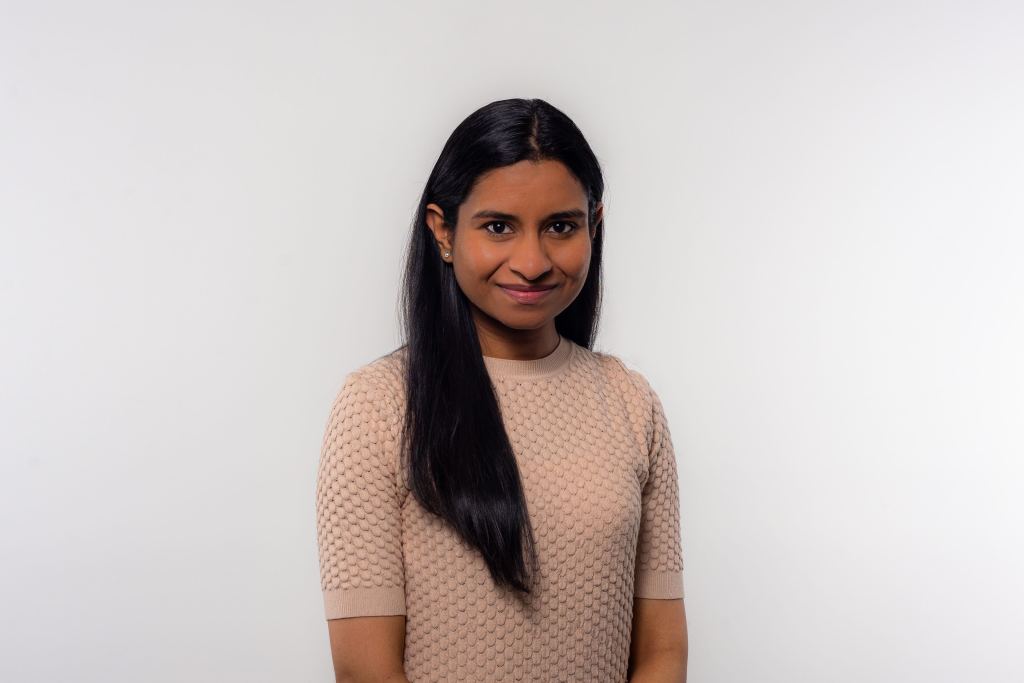
Kiranmayi Vedantham is a PhD candidate in the Neuroscience Department and the Biomedical Sciences PhD program at UConn Health.
This article is part of the 2023 International Student Perspectives Collection.
As a neuroscience enthusiast, I have always been captivated by the complexities of the brain, delving into the intricacies of electrophysiology and crafting mathematical tools to better understand neurological phenomena. My journey had a natural affinity for studying large datasets and drawing meaningful insights from these data. This knack for math and a fascination with biology eventually steered me towards pursuing a PhD in neuroscience. But little did I know that my journey as a PhD student would lead me to the intriguing world of Pharmacometrics. My summer at Novartis was a delightful blend of mathematical modeling, data analysis, and newfound passions.
My journey into the world of pharmacometrics wasn’t just a happy accident but a deliberate step in my quest for translational research. While I have always cherished the academic world of neuroscience and the thrill of electrophysiology, I had an itch for something more – the opportunity to see my work make a tangible impact in the pharmaceutical field.
But how could I demonstrate the relevance of my academic knowledge and laboratory skills to the skill set required by the pharmaceutical industry? The answer lay in multiple interviews, several cups of coffee, and countless revisions of my resume. I cast a wide net, applying for internships in clinical pharmacology, pharmacometrics, biostatistics, and more. LinkedIn helped me reach out to multiple recruiters and industry experts who offered to refer me for interviews. Each interview provided a valuable lesson, helping me refine my pitch and tailor my qualifications to the specific roles. After a series of interviews, it was a moment of serendipity when I found my fit in pharmacometrics at Novartis.
Pharmacometrics, in simple terms, is the science of using mathematical models to understand how drugs work in the human body. It’s like creating a road map for drug development. By analyzing data and building models, pharmacometrics scans can predict a drug’s behavior, helping pharmaceutical companies make informed decisions. One of the key areas where pharmacometrics shines is in clinical trials. These trials are essential in bringing new drugs to the market, ensuring their safety and effectiveness. Pharmacometrics models help efficiently design these trials, determine the right drug dosage, and predict potential side effects. In short, pharmacometrics saves time, resources, and ultimately lives.
During my internship, I found myself in the heart of an intriguing project- developing the library of pharmacometrics (or PK/PD) models for nlmixr2, an upcoming statistical R package that promises to revolutionize the field. These models were like a puzzle, helping us decipher how drugs interacted with the unique physiology of each disease. It was a rewarding experience to see science come to life in the form of tailored treatments for individuals battling these conditions.
Another highlight of my experience was being part of specialized educational sessions tailored for us, the interns. As someone new to the industry, these sessions were incredibly enlightening and provided me with valuable insights.
In conclusion, my internship at Novartis was a valuable experience that introduced me to the significance of pharmacometrics in the pharmaceutical industry. It’s a field that bridges the gap between math and medicine, contributing to safer and more effective drug development. I’m incredibly grateful for this opportunity and the support I received, and I look forward to exploring this exciting field in my future endeavors.
Kiranmayi Vedanthamis a PhD candidate in the Neuroscience Department and the Biomedical Sciences Program at UConn Health, where she studies sleep circuitry. Her research aims at addressing the mechanisms by which BK ion channels regulate neuronal excitability and thereby establish BK as a novel drug target to treat sleep related disorders.
Andy Antwi Boasiako is a freshman health science major at Anna Maria College in Paxton, Massachusetts.
This article is part of the 2023 September International Student Perspectives Collection.
My family member died in my arms. Someone I know had a heart attack. I have a family legacy. It’s been a passion since I was a kid. I imagine myself listening to stories of like-passioned individuals and shivering at the thought of the reaction following my non-traditional story. The question of why a person would want something has always been the toughest in my world. Let me tell you my story of how I see myself answering the ever-so-great question of WHY.
In the year of newness, for the simple reason that I walked into the doors of earth, and the days after, my mother introduced me to a woman. In the beginning, I didn’t mind her. I accepted her as a part of me for the sake of obedience and trust in my original landlady. Like the curiosity of her first love, I studied her. I learned her ways and marveled at what I found. Still, the main aim of being with her was always the same—obedience and respect for the one who brought her to me. She followed me everywhere, courtesy of my mother.
On the journey to find myself and purpose, she was there. For her sake, I persevered, for we had become more than acquaintances; we were friends, best friends even. Someone hurt her one day. I will never forget it for as long as I live. Someone let her child die when her head was turned the other way. Rage boiled in me; Rage so potent I couldn’t walk my path with it still weighing on me. I couldn’t believe they would hurt her. She was so kind, loving, and caring, but they did it regardless.
The nature of the perpetrator shocked me to the core. I walked by her then. Just as she did for me. I stayed quiet when she was, I talked when she did, and when she cried, I cried with her. Slowly, she walked less, talked less, and wept no more. The pain was still alive; it wasn’t strong enough to keep her down. I will miss you, my child, she would say. I didn’t know how it happened, and I will not be able to explain why, but a day unlike others came. She glowed. She was different. Come to think of it, she was always different. She was never like the others. She was not even like me.
For one, no one else aside from me saw or talked to her; no one could understand me when I spoke of her, and they sure didn’t hear her when she talked about me. I understood then. I saw it then, what it was, what the name of the feeling eating me from the inside was. I feared it; we do always fear what we don’t understand. She knew it, too; she probably knew it before I did. She waited for me, the torment she must have gone through when I stayed out longer than I should or ignored her; oh! what a foolish man I have been. To have her cherish you is a feeling unlike any other, a love stronger than distraction, though the heart’s road is tough and many attempt it, for her to choose me before I choose her.
So, I learned more about her. I met her family, and oh, what a family she had. The more I saw, the deeper the feeling and the stronger the bond. I had gotten so close to her that I refused to acknowledge the origin of our friendship; I wasn’t wrong in that either, for I had made it mine; I had made her mine. Time passed, and we had our first fight. I would have preferred a brawl with another over that fight. I failed her, even after all she had done for me. I was not able to start the road to her heart. I hurt her, albeit not like she’s been hurt before, but it was the same for her. I woke up to find a letter, words that weighed heavier than the parchment it was written on. She had left.
The one who had always stayed by me had left, and she wanted me to find her. I was broken, torn, and desperate. I hated my reality. Is heaven playing a joke on me? I said, for I had started noticing other women only after she left. They seemed like they wanted to be like her to fill the gap she had left behind, but none could, for there was none like her in my world. I laughed at the universe’s joke even though it had no humor. There was always something wrong with the “replacements.” They were too neat or too friendly or too fair or too kind. There was always something at least in my eyes; little did I know that I was so full of longing that I had metamorphosed.
So, I left all that was mine to find her in a land I did not know, in a place I did not recognize among people I had never seen. On a journey deadly to others, I became the exception to the rule, for my longing had far exceeded what was called difficult. I chose not to just walk the road to finding her but excel in it. I chose to be EXCEPTIONAL for when I finally met her. To be a man worthy of her noble self. Not a knight in shining armor but incomparable to my peers and my competitors. This is the road of the past and the present for the future. The future of the present and past. The ongoing story to be told at the congregation of doctors.
Andy Antwi Boasiako is a freshman health science major at Anna Maria College in Paxton, Massachusetts. Originally from Kumasi, Ghana, Andy wants to pursue medical school after graduating with the goal of becoming a Cardiac Surgeon. Andy serves as an Admissions Ambassador, Peer Mentor, and Resident Assistant on campus. As an International student, Andy serves as the general secretary for the International Student Association. Andy likes writing and has his “own” style of writing. He is a member of the Church of Pentecost International.
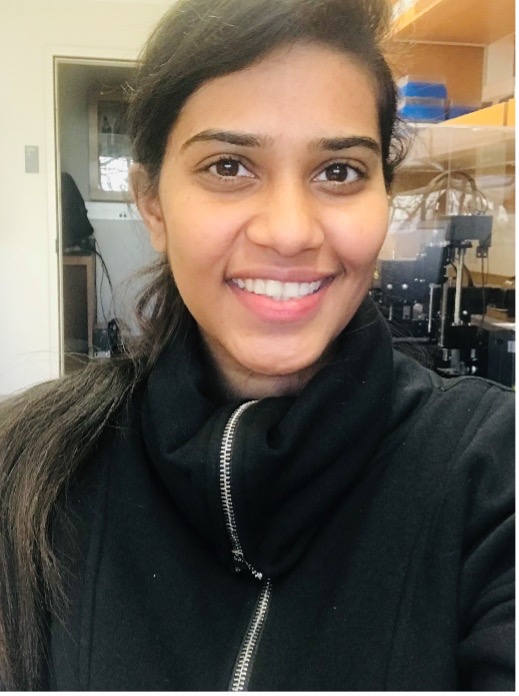
Vaishnavi Warrier is a graduate student pursuing her PhD at Boston College.
This article is part of the 2023 September International Student Perspectives Collection.
I came to the United States in the fall of 2020 in the heat of a global pandemic. Needless to say, the pursuit of achieving an advanced degree came with its own share of difficulties that were added to by the state of the world. Leaving the comfort of my home and family to come to a new country was one of the most exciting yet formidable steps that I had ever taken. My journey, like that of any other international student, was filled with excitement, fear, and hope but above all, it was a journey to discover my passion for research and in turn, discover myself.
When I came to the US, everything seemed difficult at first. My bank balance was scarce, house was small, self-esteem was low, and the support of friends and family was not immediately at hand. Nonetheless, I soon realized this is how millions of people start out their dreams in this country. I, at least, have an opportunity to learn something through this process. I promised myself that things will get better, I just need to keep working hard. And so, I started my journey as a non-immigrant graduate student in the United States.
For me as an international student, adjusting to the educational system, understanding the teaching techniques, and gaining the requisite technical and communication skills proved to be a bit of a learning curve. In the initial days, I even confessed openly that I envy my peers who could write interesting articles, give great presentations, and even express themselves so confidently. Nonetheless, I soon realized that one of the key features that would help me achieve those qualities is adaptability. As long as you are adaptable and approach these hurdles with an open mind, the gradient of the learning curve will become less and less steep. I simply started approaching these peers of mine and speaking to them at length about a diverse array of topics, in the hope of improving my communication skills. Most of my lab mates and classmates were truly friendly and considerate, which made me really enjoy these conversations. Our shared love for science, food, and sitcoms actually made me open up to them and work on my vulnerabilities. Giving presentations and discussing science does not seem to be as daunting as it once used to.
While support from friends helps you navigate smoothly through a PhD, the most important aspect of your doctoral journey is to choose the right advisor/mentor. Choosing the right person to work for is often more important than even choosing the right school or the right topic. Your advisor has to be someone you can approach with your concerns and questions, especially when you are an international student and cannot apply to several scholarships (due to rules and restrictions surrounding residential status). Most cases of dropping out of a PhD program stem from an unhealthy relationship between an advisor and their student. For an international student, the period where we have to choose an advisor can really be a period of anxiety and stress. We have a lot at stake which makes us overly cautious while choosing someone. It has to be someone who not only supports our scientific ambitions and ideas, but also understands our visa situation. We need to choose someone who comprehends that we might have to take longer periods of time off to visit our home country, prepare us for the job market in the United States, and most important of all, someone who would not exploit our visa status and obligations for their own personal gains. Personally, I have been really fortunate to find an advisor that understands these requirements. I can not only openly communicate with him about my struggles and shortcomings, but also brainstorm my ideas to achieve scientific advances.
Despite having these benefits, I still face a number of failures and experience moments of frustration each day of my PhD. Some days my experiments fail, my ideas get rejected, and I just don’t find myself motivated enough to keep working on my project. It is completely normal to go through such emotions during your PhD, but the most important thing in all of this is to keep working on yourself. As philosophical as it may sound, it isn’t easy to like every aspect of your work every day, but the key here is perseverance, to show up every day to work, to convince yourself that the research you do will benefit society and shape you as an individual that your future self will be proud of.
Each individual has a distinct PhD journey, and my small piece of advice would be to craft your own strategy for how you would approach your day-to-day hurdles to make your journey as smooth as possible. My experiences as an international student may or may not have been more difficult than my peers’ but each of us has and will go through a unique set of struggles that we deal with in our own inimitable ways to rise up to the challenge. To be a PhD student is to not just have an end goal in mind but to learn, grow, and take enjoyment from the journey that will lead you to your final goal. For me, things did get better.
Vaishnavi is a 4th year graduate student pursuing her PhD at Boston College. She studies the microbial interactions of the human nasal microbiota. Her interests are microbiology and protein biochemistry. Vaishnavi pursued her Master’s in Biotechnology from Dr. D.Y. Patil University, India. Outside the lab, she enjoys hikes, traveling, music, and dance.
This article is part of the 2023 September International Student Perspectives Collection.
Here are a few things to consider while applying to graduate programs in the US and Canada. And yes, applying to a master’s program differs slightly from applying to a PhD program. In this article we will discuss our experiences applying to master’s and PhD programs, but this is not a fact sheet.
US News is a good resource for narrowing down your options regardless of what type of graduate programs you are interested in applying to. Use those filters wisely.
You don’t have to apply to the same field you received your undergraduate/master’s degree. If a graduate program catches your eye, look at their requirements. Often, you will either meet their program’s prerequisites or if you do not, you may have to take a few extra courses. It is also sometimes helpful to email the program coordinators if you have any questions or concerns.
Applying to graduate schools is an expensive and time-consuming process. Many master’s programs do not offer teaching assistantships or stipends (few do), whereas most PhD programs in science offer either options or both and will cover your tuition for the duration of your degree. Because of this, PhD programs are often more selective compared to master’s programs in accepting students. Few PhD programs do not take international students based on funding sources since international students are not eligible for many NIH-funded grants on an F1 visa. While ten schools might be a good number of each to apply to for a master’s, consider applying to more programs will increase your chances of getting invited for an interview. Interviews are also another difference between master’s and PhD programs. Almost all PhD programs have an interview process before offering you a formal acceptance, whereas with most master’s programs, often may not interview candidates.
Many schools have waived the GRE requirements. Like the application process, standardized tests are expensive. Check the requirements before taking your GRE. You will save valuable time and resources if these test scores are optional.
Some programs are more selective than others and only accept a handful of students. For example, neuroscience PhD programs are notoriously selective, whereas biomedical PhD (umbrella) programs may accept more students. However, there is an overlap between labs and research, and applying to biomedical science programs won’t limit you from doing neuroscience research. Choose your program wisely. I wish I had done this before I started applying to PhD programs.
If you are getting paid as a student, you must pay taxes. If you own a car, you may have to pay property tax depending on the state. Keep this in mind as you plan. Save some money in your rainy-day account just in case.
There are many excellent schools and programs that are less well-known in and outside the US. Do not be disheartened if you do not get into your top-choice school.
Graduate school is expensive, and certain cities (Boston, New York City, anywhere in California, Seattle) have a high cost of living. Consider these factors as well when you choose your schools. The stipend offered may differ based on the cost of living but the NIH does have cap’s on what graduate students can make during their training.
Reach out to alums on LinkedIn. Many people are responsive and love to offer advice or talk about their experiences. The worst that can happen after you reach out is you will be ignored.
Sell yourself and your experience. If you have work experience, write about it in your personal statement, but most importantly, make sure to list it and your skills in your resume. Highlight your accomplishments. Your work and research experience are vital for PhD programs because they show your interest and passion. Don’t be afraid to make yourself stand out. Keep your resume to one page unless it’s a CV and use action words. Follow the simple rule of show, don’t tell. If you worked under a professor or had an independent project, or worked after your undergrad, write about the skills you acquired and tailor to skills to fit the program you’re applying to. Your skills are transferrable. I am a pharmacy major doing my PhD in neuroscience. Don’t be afraid to branch out.
If you are interested in pursuing a graduate degree in Canada, here are some considerations:
You cannot directly apply to many PhD programs with a bachelor’s degree. Instead, you will need to apply to a master’s program with an option to transfer to a PhD program after 1-2 years. This would require a research proposal to be submitted and approved by your advisory committee.
Enrolling in a master’s degree in Canada usually comes with financial assistance in the form of both teaching and research assistantships. Hence, if you would rather have a master’s degree, you will not have to worry about securing a loan or working part-time to fund your living costs.
The master’s programs in Canada are more research based with much importance given to your thesis project. You would be expected to present at conferences and contribute to manuscripts even as a master’s student. This also has the added benefit of having a minimal course load as most of your time is dedicated to lab work.
As the course of these master’s programs is determined by the pace of your dissertation research, you should not be discouraged if it takes longer than two years to finish your program. Many students graduate after 2.5-3 years in the program.
Unlike in the US, you must apply to a program after finding a PI willing to support you financially. Upon secure admission to a lab, you would apply to the program. This would also mean sending well-crafted emails to multiple professors describing why you like their research and how you are a good fit for the lab. It would be wise to begin this process 4-6 months before the program application deadlines.
There are no rotations even for a direct entry PhD student (if you have a master’s degree). You would be in your dissertation lab from day one of your program. This could be advantageous as you do not waste any time before stepping into your research. However, it doesn’t leave you much room to easily transfer to another lab in expediting circumstances. So, it would be pertinent to reach out to former and current trainees from your lab to assess the lab environment and see if you are a good fit for the lab (and vice versa).
For international students, the fee is higher (although cheaper than in the US), and the tuition is not covered by the graduate school, unlike in the US. However, some universities, like the University of Manitoba, offer the International Graduate School Entrance Scholarship that would reduce the fee to at least the amount that local students pay.
Although most federal scholarships have citizenship requirements like the US, there are prestigious PhD fellowships such as the Vanier Canada Graduate Scholarship and a fair amount of provincial and university fellowships open to international students.
Students in the same program are not guaranteed to have the same stipend. Negotiations between individual supervisors and students usually decide upon the stipend. They can vary based on how much funding the student has already secured and how much the supervisor is willing to pay.
One advantage to studying in Canada is that fellowship stipends are non-taxable. Since you would also be paying fees and have additional financial obligations such as rent, you could file for tax returns and receive refunds.
This article was co-written by Sai NiveditaKrishnan and Deepa Anjan Kumar
Bernard Ofosuhene is a senior health science student at Anna Maria College in Paxton, Massachusetts.
This article is part of the 2023 September International Student Perspectives Collection.
As I reflect on my journey as an international student, I have realized that this journey is more than just pursuing a degree; it is about personal growth, too. Leaving behind my family to embark on my academic journey in a foreign land was a difficult decision to make. Having arrived in the United States in the pivotal Spring 2020 semester when the pandemic had begun to unfold presented me with a unique set of challenges than what international students usually face. During this time, most colleges, including mine, were forced to transition to fully remote instruction and on-campus housing was closed. The daunting task of adapting to new instructional modalities and new culture were hurdles that I had to overcome.
My initial days in America presented me with lots of boundaries. Everyone had begun to practice a new culture, social distancing. I thought I had entered a world full of isolation and anxiety. The challenge of adapting to an academic environment where all my instructors and classmates were virtual ones seemed like an irony to me. In the supermarket, I had to keenly look out for marks that said 6ft apart so that I didn’t cross my boundaries. Not every seat at the restaurant or on the bus could be used; I always had to double-check to make sure I was not violating the seating rules. In fact, everything around me was about rules and precautions. Despite the dual challenges of an unanticipated outbreak of a pandemic and the usual adjustments international student face upon arrival in the United States, one important lesson I learned was resilience.
Amidst these times of uncertainty, my career aspirations evolved. I had the privilege to serve as a contact tracer during the Covid-19 pandemic. My task involved following up with positive cases and their close contacts. Being at the forefront of the Covid-19 pandemic, I developed an ultimate passion for healthcare. I want to pursue a career in medicine. As a contact tracer, I came across different people with diverse backgrounds and identities, and I began to experience the new America. Each person I interacted with gave me a unique sense of cultural experience. This role also exposed me to some healthcare disparities among different groups of people in the United States. With the desire to improve healthcare accessibility, I am driven to serve the underprivileged and marginalized populations as a healthcare provider in the future.
I began to have a better experience as COVID-19 cases declined, and things were back to normal. On-ground academic work had resumed, and engaging with my peers from various parts of the globe gave me a comprehensive view of the world. An integral part of being an international student is getting to learn about the rich traditions, beliefs, and perspectives of other students. From engaging in traditional games to sharing meals with other international students, I have come to appreciate the importance of diversity in any academic setting. I found classroom discussions more meaningful as they gave everyone the opportunity to share their unique experiences. These interactions gave me a sense of belonging to my academic community. With time, I have come across helpful instructors who have contributed to my academic achievements. Striving for academic excellence while being away from home could be challenging, but with the support of people around you, it can be achieved.
In conclusion, my journey as an international student has transformed me into a better person. It has been a journey of personal growth, career discovery, and cultural exploration. Each challenge I faced along the way has forged my character and prepared me to withstand greater challenges I may encounter in my career. I am committed to using the lessons learned and the knowledge accrued to serve my community.
Bernard Ofosuhene is a senior health science student at Anna Maria College in Paxton, Massachusetts. Originally from Accra, Ghana, Bernard is wrapping up his studies at AMC and is graduating in December 2023. He is currently engaged in Clinical Research at UMass Medical School and is planning on applying to both medical school and MD/PhD programs in the US with the ultimate goal of becoming a physician-scientist.
Join Beyond the PhD in welcoming Dana Bucin on September 14th from 3-4 pm ET. Dana Bucin is a partner and chair of the immigration practice at Murtha Cullina.
Dana R. Bucin is a partner and chair of Murtha Cullina’s Immigration practice. She represents businesses and individual clients on a wide range of immigration matters, including green card applications, work visas, student visas, foreign investor visas, asylum, naturalization, religious work visas, and various other employment and family-based immigration matters.
As an immigration attorney with a business/corporate legal background, Dana’s experience includes counseling foreign investors and entrepreneurs on setting up businesses in the U.S. or investing in existing U.S. ventures and obtaining a visa or green card based on such investment or entrepreneurship pursuant to the E-2, L-1 “new office”, H-1B “entrepreneur” and EB-5 visa options.
Dana regularly provides multilingual legal representation in English, Spanish, French and Romanian. She also has a basic knowledge of Italian, German, Hungarian and Latin. She is often quoted as an expert by publications such as Bloomberg/BusinessWeek and the Hartford Business Journal on immigration law topics.
Dana is always very active on social media. Feel free to follow her on Facebook and LinkedIn.
We welcome you to reach out to Dana if you would like legal advice by booking an appointment click here.
This month at Beyond the PhD we are focused on international students. International students often bring unique perspectives and experiences that enhance the overall academic environment. Their different educational systems and approaches to learning diversify classroom discussions, encouraging critical thinking and the exchange of ideas. Collaborating with international students also exposes local students to different learning styles and challenges them to broaden their horizons. By interacting with individuals from different backgrounds, students gain valuable intercultural communication skills and develop a global perspective that is highly sought after in today’s interconnected world.
Beyond the PhD will share the stories of a few international students throughout September, including undergraduates, graduate students, and postdocs. We hope that their stories inspire, educate, and want to help you enact change in the world. Then on September 14th, we are hosting Dana Bucin an immigration lawyer from Murtha Cullina LLP to discuss visa types, application processes, and how international students can start preparing early for visa success.
We invite international students to submit a photo and blurb of themselves working or doing science or studying what they are passionate about. More information can be found here and photos can be submitted here.
Beyond the PhD hopes to help you on your educational journey to finding your STEM career.










 Beyond the PhD